 Eurasia Press & News
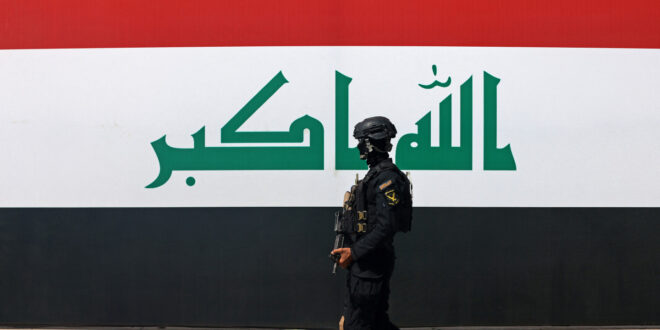
After 12 years on the ground, the last troops from the International Coalition that fought the Islamic State (IS) departed Iraq last week.
It was a comparatively quiet occasion compared with the composed exit by the US in 2011 or the chaotic withdrawal from Afghanistan in 2021. It nevertheless marks a new chapter for Iraq, which from now on will have less international support and fewer eyes upon it.
A major question is whether Iraq will be able to manage its own security without the stabilising presence of US and Coalition troops. The last time it was in this position, Baghdad failed spectacularly, and foreign troops were back within three years.
The regional security environment is worse today amid the war between the US, Israel, and Iran. All three countries have hit targets in Iraqi territory despite Iraqi and Kurdish leaders declaring their neutrality in the conflict.
In recent weeks, IS militants have increased their activities in Kirkuk and the disputed areas and launched a deadly attack on a police unit last week.
The Coalition also leaves with the structure of Iraqi resistance militias, many of whom are backed by Iran, largely intact despite repeated assurances by the Iraqi government that it will bring arms under the control of the state.
A new era of Iraqi sovereignty
From this vantage point, the withdrawal might seem foolhardy – and many analysts have argued this point. Therefore, it is important to understand that this change is part of several strategic shifts that are happening coincidentally but reinforce one another.
From an Iraqi point of view, Baghdad is attempting to normalise relations with an international community that has had a significant influence over its affairs for the last 35 years through sanctions, war, occupation, humanitarian assistance, development, and military cooperation. In few countries has this presence been as intense or durable.
The new approach stems from a desire that Iraq should take greater control of its affairs and reestablish the system of bilateral relations that most other states enjoy.
The first step was to end special UN institutions, including the war crime investigative unit UNITAD in 2024 and then the political oversight mission of UNAMI the following year. At the same time, the government of Prime Minister Mohammed Shia’ al-Sudani entered into talks with US President Joseph Biden to end the mission of the anti-IS Coalition.
They agreed that US troops would leave federal Iraq in 2025 and leave the Kurdistan Region by 30 September 2026.
Although begun by their predecessors, both developments were finalised and implemented during the Trump administration and, in the latter case, the new administration of Prime Minister Ali al-Zaidi.
This suggests that they represent national strategies, rather than the whims of individual administrations. These approaches could have been softened following Trump’s return to the White House or after the 2025 Iraqi elections but were instead left on track.
This also reflects changes in the US and the West, whose motivations to be present and active in Iraq are affected by conditions at home. Trump’s decision to launch a war against Iran is typically bellicose, but cuts against the prevailing mood in the US.
A key plank of his 2024 election was not starting new wars and avoiding prolonged military missions abroad. American voters appear ready to punish Republicans at the midterms in part for failing to honour that promise.
Both the US and Europe have stressed that the end of the Coalition mission does not mean that they are completely ending their security relationship with Iraq. However, the plans for how to replace the Coalition’s presence through bilateral training missions, intelligence cooperation, and other means remain vague and have not been laid out in formal agreements yet.
Military power is a significant pillar of influence. It is unclear how they will maintain this or replace it through other means in the absence of a permanent presence.
For example, the US and Europe are also cutting back on their foreign aid budgets. This shift is larger than just one country and affects development and humanitarian funding around the world. While sometimes controversial, it represented a major part of the international community’s influence in Iraq and is now receding.
Theoretically, these could be replaced with economic power. Before the Iran war, the Trump administration signalled that it would pursue a policy of “commerce, not conflict.” This excited many people in Baghdad, Erbil, and around the region, but may have failed amid the chaos caused by the US-Iran war and the significant economic fallout from the closure of the Strait of Hormuz.
Moreover, the current aperture of foreign economic investment in Iraq continues to be narrow, with energy as the prime focus.
A shifting regional balance
In the absence of US military power or a suitable replacement, other countries are stepping into this gap.
Iran has had a major presence in Iraq since 2003 and appears likely to increase its influence. This has been a major cause for worry regarding the US withdrawal, but one that did not prevent it from taking place. It is likely that Iraq will remain an area of contest and conflict between Washington and Tehran.
Turkey is also becoming a more influential actor in Iraqi affairs. Although historically keeping each other at arm’s length, Baghdad and Ankara are enjoying closer relations.
Issues like economic development and infrastructure are taking precedence, as old difficulties like water flows are addressed through talks and thornier issues like the presence of the Kurdistan Workers’ Party (PKK) become less salient.
Nevertheless, it is impossible not to worry about Iraq and the challenges it faces.
It seems unlikely that IS will reconstitute itself or become active to the levels it was in the 2010s. The Iraqi security forces and the Kurdish Peshmerga are more capable now and ought to be able to handle this task, but the possibility that it will launch renewed attacks and create instability in vulnerable areas is real.
The greatest security risk comes from the Iraqi resistance militias, who will likely choose to exploit the opportunity opened up by the US withdrawal. While some groups have opted to buy into the disarmament process, others who have less of a vested interest in the Iraqi political establishment have refused to do so.
This will have a destabilising effect by undermining the authority of Zaidi’s government. These groups could also play a potentially escalatory role in the ongoing regional war by launching attacks on the Kurdistan Region, Gulf states, or US bases. How Baghdad responds to those pressures is a major point of focus.
For better or worse, Iraq’s political leadership has chosen a path where it has less immediate international support to respond to challenges. In that absence, it is not yet clear whether current Iraqi institutions, which came into being during the previous period of intensive international involvement, will be able to manage in this new environment.
This task falls to Prime Minister Zaidi, a political neophyte selected from obscurity by the Shia Coordination Framework (CF) who also enjoys the support of Washington.
Nevertheless, the challenge ahead of him is massive. By striking out on its own and consequently being deprioritised by those who used to support it, Iraq is entering an uncertain new phase.