 Eurasia Press & News
U.S. President Donald Trump stated earlier today that, what he described as “the new Iranian leadership,” has expressed interest in negotiations.
The operational authority over the security and military apparatus has reportedly become more concentrated within figures closely aligned with the Islamic Revolutionary Guard Corps (IRGC) and the former Supreme Leader’s inner circle.
At present, it is unclear who the next Supreme Leader will be, but the Assembly of Experts is expected to meet in the next days to appoint the new leader.
There are multiple contenders for the position of Supreme Leader, all with varying ideological views; however, until one is chosen, negotiations with the U.S. and Israel will most likely be tactical positioning to bridge the period between Supreme Leaders rather than a strategic shift by Tehran.
U.S. President Donald Trump stated earlier today that, what he described as “the new Iranian leadership,” has expressed interest in negotiations. “They want to talk, and I have agreed to talk, so I will be talking to them. They should have done it sooner. They should have given what was very practical and easy to do sooner. They waited too long,” Trump told the Atlantic’s Michael Scherer during a phone call.
His remarks came amid parallel diplomatic signaling from regional actors. Badr al-Busaidi, Oman’s Foreign Minister, spoke by phone with Iran’s Foreign Minister Abbas Araghchi. According to Oman’s Foreign Ministry, Araghchi emphasized that Iran’s position “calls for peace,” and that the Islamic Republic remains open to “any serious effort that will contribute to stopping the escalation and restoring stability.”
At present, there is no clearly defined “new leadership” in Tehran. The formal constitutional transition mechanism is in motion, but real power remains concentrated in established security and clerical networks. Despite President Trump’s statement to the Atlantic, it remains unclear what constitutes the “new Iranian leadership.” Iran has neither formally selected nor announced a new Supreme Leader. The sitting president and foreign minister remain in office, and the diplomatic interlocutors appear unchanged.
The real operational authority over the security and military apparatus has reportedly become more concentrated within figures closely aligned with the Islamic Revolutionary Guard Corps (IRGC) and the former Supreme Leader’s inner circle. In effect, governance has moved away from visible political institutions toward entrenched security actors with Revolutionary Guard backgrounds.
Over the past several months, the day-to-day management of the regime has increasingly shifted to Ali Larijani, Secretary of the Supreme National Security Council (SNSC), who has been overseeing operational matters on behalf of the late Supreme Leader. As the aging Supreme Leader gradually reduced his public appearances and limited direct engagement, practical authority, particularly in security and strategic affairs, appears to have been delegated to Larijani, who continues to manage core regime functions.
The interim Leadership Council, constitutionally tasked with filling the transitional gap, is composed of three figures with markedly different orientations: a sitting president widely viewed as relatively moderate; a head of the judiciary known for his ultra-conservative positions; and a clerical scholar recently appointed by the Expediency Council. These ideological differences will make it difficult for the three members to reach consensus on any major decisions, such as re-entering negotiations with the United States. This contrasts with Larijani, who, in his capacity overseeing the Supreme National Security Council and managing day-to-day security affairs, operates within a more unified chain of command. Larijani possesses the mandate to shape or facilitate any potential future engagement with the U.S. related to de-escalation or indirect diplomacy.
Larijani will thus likely seek to continue Tehran’s strategy of sustaining a war of attrition, steadily raising the military and political costs for the United States and Israel. The objective is likely to build pressure toward de-escalation by making continued conflict increasingly costly. Strategically, this signifies that any outcome that preserves the system, whether through a ceasefire, de-escalation arrangement, or diplomatic off-ramp, can be framed internally by the regime as a win.
In a Sunday interview with Al Jazeera, Araghchi stated that a new Supreme Leader could be selected in “a day or two.” The body ultimately responsible for appointing the next Supreme Leader is the Assembly of Experts — an 88-member clerical body elected by the public but heavily vetted by the Guardian Council. However, despite concrete constitutional procedures to select a new Supreme Leader, Iranian domestic politics does not always play out as expected. The de facto power dynamics and preferences within the IRGC, senior clerical networks, and domestic security agencies often influence outcomes more than written procedure, which also may be the case for the appointment of the next Supreme Leader.
Several names have been discussed as possible contenders for the next Supreme Leader. Mojtaba Khamenei, the second son of the late Supreme Leader, is considered a leading contender. He reportedly wields significant influence among both clerics and the IRGC. However, hereditary succession is deeply controversial within the regime due to historical memory of the 1979 revolution that overthrew the monarchy of Mohammad Reza Pahlavi. There is widespread fear that a father-to-son transfer of power could undermine the regime’s ideological legitimacy.
Alireza Arafi, who is a senior cleric and the deputy chairman of the Assembly of Experts, is also a contender due to his prominence as a religious figure. However, he lacks the broad political appeal that has hitherto been integral to the appointment of the Supreme Leader. In the past, Arafi has served on the Guardian Council and holds influence in the Qom Seminary, the most influential Shia academic center in Iran. He was recently appointed as a jurist member of the temporary Leadership Council.
Gholam-Hossein Mohseni-Ejei is also a name circulating as a potential future Supreme Leader. He is currently head of the Iranian judiciary and has served as intelligence minister and prosecutor general. However, Ejei is aligned with the regime’s conservative wing and maintains close ties with the security establishment and may likewise not enjoy broad political appeal.
Mohammad Mehdi Mirbagheri, another potential Supreme Leader candidate, is an ultra-hardline cleric and member of the Assembly of Experts, primarily known for his strongly anti-Western worldview and leadership of the Islamic Sciences Academy in Qom. He is the most radical candidate, and was a prominent voice in dismissing the Women, Life, Freedom movement in Iran — sparked by the September 2022 death of Jina (Mahsa) Amini in custody — which became the country’s most consequential protest wave in years, exacting a heavy public toll (hundreds killed, thousands detained and prosecuted).
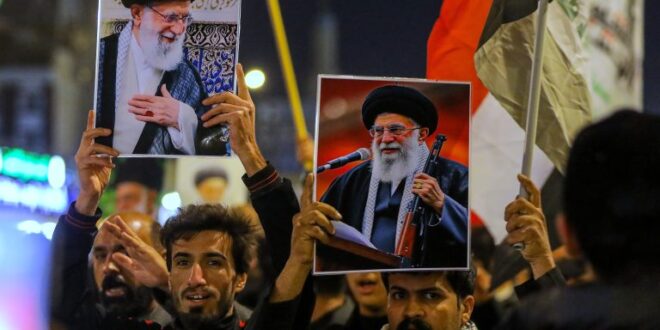
Lastly, Hassan Khomeini, the grandson of Ruhollah Khomeini, has been mentioned as a potential contender in the succession of Ali Khamenei. Considered more reformist in orientation, he lacks a formal government post and was disqualified from running for the Assembly of Experts in 2016. His candidacy would represent a softer ideological turn, though resistance from hardline factions, who have organized large-scale protests against the U.S. and Israeli strikes in recent days, would be significant.
In the upcoming days, any diplomatic overtures by Tehran will need to be interpreted against the backdrop of the ongoing internal power struggle in Iran created by the power vacuum left by the death of Supreme Leader Ali Khamenei. Until a permanent Supreme Leader is chosen that shapes paths ahead, negotiations will most likely be tactical positioning to bridge the period between Supreme Leaders rather than a strategic shift by Tehran.