 Eurasia Press & News
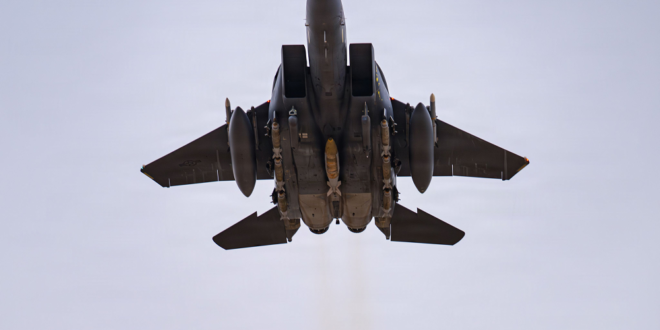
After six weeks of conflict, the cost in munitions expenditure and damage is unprecedented given the time period
hirteen military service members killed and 365 injured, 46 aircraft damaged or destroyed, and between $25 billion and $30 billion spent. That is the cost of the US war on Iran so far.
Since the US and Israel struck Tehran on February 28, launching Operation Epic Fury, about 46 highly specialised American aircraft have been lost or damaged, according to the Pentagon. The hardware replacement cost for destroyed assets alone is estimated at more than $1.45 billion, while the Centre for Strategic and International Studies (CSIS) puts the broader figure – including damage to base infrastructure and munitions expenditure – at more than $3 billion. The centre also estimated that the cost of war was likely to have exceeded $25 billion by March 26.
The final total cost today is not yet known, and the Pentagon has yet to release a consolidated official accounting of the military losses over the 40-day war. However, some of the munitions destroyed span some of the most advanced and strategically irreplaceable aircraft in the US’s arsenal, including four F-15E Strike Eagles, at least 17 MQ-9 Reaper drones, a fleet of KC-135 refuelling tankers, an E-3 Sentry airborne warning aircraft and, in what defence analysts have described as the most symbolically significant incident of the war, an F-35A Lightning II – the first fifth-generation stealth fighter to sustain combat damage.
The trade-off for the US was 13,000 hits on targets in Iran, according to US Central Command (Centcom) estimates, widespread damage to Iranian infrastructure and the killing of a dozen members of Iran’s leadership, including the supreme leader Ayatollah Ali Khamenei.
Expensive friendly fire
The single costliest day in terms of aircraft losses came not from Iranian fire but from an allied nation. On March 1, just five days into the war, three F-15E Strike Eagles were shot down by Kuwaiti air defences in what Centcom described as an “apparent friendly fire incident”, with open-source analysts pointing to a Kuwaiti Air Force F/A-18 Hornet as the probable cause.
All six crew members ejected safely and landed in Kuwait, where videos showed some being picked up and assisted by locals. The three jets, each valued at between $87 million to $100 million, represented a $261 million to $300 million loss before Iran fired a single shot at a manned American aircraft.
Those losses were quickly overshadowed by the human cost. On the same day, six US service members were killed in an Iranian unmanned aircraft system attack on the Port of Shuaiba in Kuwait. And on March 12, a KC-135 Stratotanker crashed over western Iraq following a mid-air collision during a refuelling operation, killing all six crew members on board. It was the deadliest single aviation incident of the war for American forces since the 2003 US-led Iraq War. A second KC-135 involved in the same collision was damaged but landed safely.
The stealth fighter hit
On March 19, an F-35A Lightning II, costing at least $110 million, was struck by Iranian ground-based air defence fire while flying a combat mission over central Iran. A Centcom spokesman told reporters the pilot sustained shrapnel wounds but made an emergency landing at a US base in the region, and the aircraft was assessed as potentially repairable. It is thought to be the first time in the F-35’s operational history that the aircraft was hit in combat.
The incident attracted intense scrutiny beyond the immediate damage. There were reportedly concerns within the Pentagon on the prospect of advanced stealth technology falling into Iranian, Russian or Chinese hands had the aircraft gone down over enemy territory.
Attacks on Prince Sultan airbase
While the fighter losses drew public attention, some of the most strategically damaging incidents occurred on the ground. On March 27, Iran launched a co-ordinated missile and drone strike against Prince Sultan Air Base in Saudi Arabia, destroying one E-3 Sentry AWACS aircraft and damaging a second.
The E-3, a Boeing 707-based flying radar station central to co-ordinating strikes, tracking airborne threats, and managing battle space assessments, has a replacement cost of about $270 million each.
The same March 27 strike also destroyed a KC-135 Stratotanker and damaged five others on the ground at Prince Sultan, adding further strain to an aerial refuelling fleet already stretched by the operational tempo of 12,000 air missions as of April 2, according to Centcom.
A daring rescue and its cost
Iran’s first confirmed destruction of a crewed US jet came on April 3, five weeks into the war. An F-15E Strike Eagle was shot down over south-western Iran. A two-person crew ejected. The pilot was recovered within hours, but the weapons officer, identified by US President Donald Trump as a colonel, evaded capture for nearly 48 hours in the mountains of south-western Iran. All the while, a search went on by hundreds of Islamic Revolutionary Guard Corps (IRGC) troops, and Iranian state media advertised a $60,000 reward to local militias and civilians for finding him.
The seven-hour rescue operation that followed was one of the largest and most complex combat search-and-rescue missions the US military has mounted in decades – and cost the Americans at least $300 million, according to calculations by The National.
Delta Force operators and members of the Navy Seal Team Six were among hundreds of special operations troops involved. The teams were supported by dozens of aircraft and intelligence assistance from Israel, who postponed planned strikes to avoid interfering in the mission. When American forces reached the officer, two MC-130J Commando II special operations transports, each valued at $65 million, became stuck in sand at an improvised airstrip inside Isfahan province and were destroyed by US forces to prevent their capture. Iranian state television broadcast footage of the wreckage, claiming a victory. The officer was ultimately rescued and was described by Trump as “seriously wounded” but expected to recover.
On the same day, an A-10 Thunderbolt II providing cover for the initial search-and-rescue effort near the Strait of Hormuz was struck by Iranian fire, with the pilot ejecting into the Arabian Gulf and being recovered safely. A second A-10 was damaged over Kuwait airspace in a related incident, its pilot also ejecting safely before the aircraft was written off. Two UH-60 Black Hawk helicopters involved in the rescue were hit by Iranian ground fire, sustaining damage but returning to base with injured crews.
Drone attrition and a war of numbers
Away from the headline incidents, a quieter but significant drain on American resources played out across the region’s skies. By early April, US officials confirmed the loss of at least 17 MQ-9 Reaper drones, nine shot down by Iranian air defences, one destroyed on the ground in Jordan by an Iranian missile, two that crashed, and five further losses in the weeks that followed. At around $30 million for every unit, according to analysts, the Reaper losses alone represent more than $510 million in replacement costs and about six per cent of the available fleet.
At least two weapons from the Americans made their debut during the war on Iran. They included the LUCAS (Low-cost Uncrewed Combat Attack System) one-way drones, which the American’s appeared to have taken from the Iranian Shahed-136 technology, plus the ground-to-ground PrSM (Precision Strike Missiles).
Experts said the most novel development, however, was the CIA innovation of the Ghost Murmur device, which combines quantum magnetometry – technology that measures magnetic fields – with AI to detect a human heartbeat from a great distance. It is said to have been used to help locate the downed F-15 weapons officer south-west of Isfahan.
Precision Strike Missile (PrSM)
Capable of striking targets up to 500km away, the Precision Strike Missile (PrSM) – produced by Lockheed Martin – was used in combat for the first time by the US military in the war on Iran, expanding their deep-strike capability.
The ground-launched ballistic missile has a longer range than its predecessors and is smaller in size, allowing twice as many PrSMs to be loaded onto launchers.
On March 25, Lockheed Martin announced it had signed an agreement with the US Department of War to accelerate and quadruple production of the PrSM.
The weapon was so effective that, according to recently released budget documents, the army is asking for almost $2 billion to purchase more in 2027.
Low-cost Uncrewed Combat Attack System (Lucas)
A one-way attack drone – also known as a kamikaze or suicide drone – the LUCAS was also used in combat by the US military for the first time in the Iran war.
With a range of about 800km, the expendable Lucas drone aims to counter low-cost drone swarms by detonating the warhead it carries on impact.
Built by Arizona-based SpektreWorks, the drone was reverse-engineered from Iran’s Shahed-136 platform to counter its attacks. It can be launched through catapults, from mobile ground systems and with rocket-assisted takeoff.
Its deployment by the US army represents a potential shift towards a more cost-effective philosophy of increasingly using cheaply-made interceptor drones, according to Military Times.
Trade-off between ‘blood and treasure’
Knowing there was limited time to inflict damage on Iran, the US and Israel spared no expense on munitions and military spending, experts told The National.
That meant there was very little “value for money calculation” done by the US, said former military intelligence officer Lynette Nusbacher.
According to US official press briefings, the first two days of the war alone cost the US military more than $5.6 billion – about 25 times more a day in comparison to the sustained Iraq 2003 war, which cost around $117 million a day at the height of the war. The first six days of the war cost more than $11.3 billion, The New York Times reported, quoting Pentagon officials in a closed-door briefing.
“The US wanted to expend as much as possible, as early as possible in order to achieve maximum effect,” Ms Nusbacher said. “This was a very expensive war because the Americans and the Israelis were both lavishly expending munitions in order to achieve maximum effect in the minimum possible time.”
Similarly, the US was willing to expend uncrewed aircraft such as the Reaper drones to achieve rapid results.
“There is an interaction between blood and treasure and if you’ve got more treasure, you can afford to risk Reapers at $30 million a go,” said Dr Nusbacher. “For Americans, that is the cost of doing business and there is a trade-off between getting the reconnaissance, the intelligence that you need and what you’re willing to spend on it.”
However, former US Marine John Hackett said perspective was important when contextualising American military losses and when considering the number of targets hit.
During the 1991 Gulf War, an average of one aircraft was shot down a day over the 100-day invasion – a slightly lower loss rate than the aircraft and drones destroyed over the 38-day war on Iran.
The US has also expended a huge amount of ordnance that is difficult to replace at speed, including more than 850 of its prized Tomahawk cruise missiles, which account for at least a year’s worth of manufacturing. By comparison, the US fired 802 missiles during the 2003 invasion of Iraq.
That is likely why the air force reverted to use “dumb bombs” fitted with relatively cheap GPS technology, the analysts said.
While the 13,000 targets hit were a considerable amount, it was impossible to judge how effective they had been without what the military call “battle damage assessment”.
“You could strike 13,000 stones and say that you had a success,” said Mr Hackett. “But you need to know battle damage assessment. What did they actually hit? What was the effect of that? So you really can’t know for sure and it’s just unrealistic, especially at that high volume of strike numbers.”
He said pilots were usually given a 10-figure military grid reference co-ordinate on which to drop their bombs without being given the intelligence on the nature of the target.
“They’re not getting a full briefing on the intelligence about the site they’re striking, especially with that high volume and high tempo, which means battle damage assessment is typically done by video analysis from a distance.”
Iran’s accuracy
Experts and security sources said the high accuracy achieved by Iranian missiles and drones also caused considerable damage to US aircraft parked on airfields in the Gulf region.
A number of Iranian military and civilian officials were allegedly based at a Russian satellite ground station, defence sources have told The National, where they are likely to have been given precise co-ordinates for US airfield attacks as well as battle damage assessment of its strikes.
“What is remarkable to me is not that the Americans have been able to achieve a high level of precision across their entire range of munitions, but that the Iranians have been a lot more precise than anybody has expected,” said Dr Nusbacher.
She also assessed that Iran’s precision was due to “getting Russian targeting data” but also that its missiles and drones “have shown themselves to be as precise as advertised across the board in this war”.
Mr Hackett, a former US Marine special forces operator, added that America “may have underestimated the ability of the Iranian IRGC aerospace forces to actually strike those targets, which is a US mistake”.
Not so superior
With two fighters downed by ground fire, plus several more damaged, including an F-35 stealth warplane, talk of American-Israeli “air superiority” was overblown, experts suggested to The National.
“The vulnerability of an F-15 Strike Eagle in a contested environment was a little bit surprising,” said Dr Nusbacher. “The Americans were talking the language of absolute air supremacy but, if that’s the case, I would expect not to see any air losses. Clearly, this was a far more contested operation in the air than one might have thought.”
While the US lost 46 aircraft in the war, Israel’s air force lost none but did have 18 drones, mainly Hermes 900, shot down over Iran, while the Americans had 19 Reaper drones taken out.
Mr Hackett agreed that the US assertion that they had achieved air dominance was incorrect and “just the facts on the ground are saying the opposite is true”.
“Degraded is not the same as destroyed, and it’s a very important military reality for us to acknowledge that Iran’s air defence is not 100 per cent gone.”
After failed negotiations between the US and Iran in Islamabad, it remains unclear whether the ceasefire, which expires on April 22, will turn into permanent peace or crumble into hostilities. Meanwhile, Iran is assessing the damage to its buildings, facilities and infrastructure, and preparing for reconstruction while the US carries out its own evaluations to study where it went wrong and where it had been successful – by its own measures.
Until then, munitions, warplanes and even metal can be rebuilt but with more than 3,600 people estimated to have been killed, the real cost of war will always be the irreplaceable human life lost.