 Eurasia Press & News
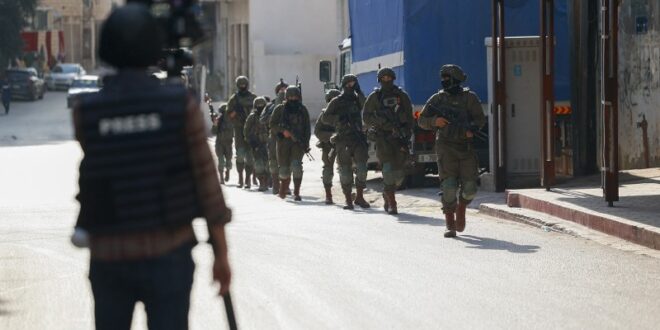
Palestinian journalists in Gaza are tackling disinformation about the war as part of a pioneering project organized by the Arab Fact-Checkers Network (AFCN).
Zarifa Hassan, 24, was still studying for her degree in political journalism when her university in Gaza was destroyed by Israeli forces in the early days of the conflict that erupted after October 7, 2023.
That did not stop her from graduating two years later — or from braving Israeli bombs and extreme hunger to report across the besieged enclave.
As the war raged, she joined a landmark project by the Arab Fact-Checkers Network (AFCN) to verify information on the ground for international media and fact-checking outlets from Italy to Iran.
“I believe the work I’m doing is making a difference,” she told OCCRP of her experience with AFCN, an initiative launched by OCCRP member center the Arab Reporters for Investigative Journalism (ARIJ).
“In the early stages of the war we noticed a lot of out-of-context pictures,” she said, describing a wave of disinformation on social media.
To verify the accuracy of images and videos, Hassan traveled long distances to interview sources on the ground and cross-reference her findings with Google Maps data.
She carried out this work while enduring severe food shortages, sporadic internet access, and constant threats to her safety.
Israel has killed more than 200 Palestinian media workers in Gaza since October 7, 2023, “systematically destroyed media infrastructure” in the enclave, and “tightened censorship” in the West Bank and Israel, according to the Committee to Protect Journalists (CPJ). Journalists in Gaza have also reported “harassment and intimidation by Hamas,” the watchdog notes.
After the U.S.-backed ceasefire agreed to by Israel and Hamas in October 2025, Hassan told OCCRP late last year that she felt “safer” but still faced obstacles in her work, such as a 90-minute trip to an international organization’s tent to access the internet. Moving around Gaza remained a challenge, she added.
“Palestinian journalists and fact-checkers want to work on some story topics and angles but they can’t because the bombing is ongoing and they are afraid of being targeted,” she said.
Six months on from the ceasefire, Israel has continued to launch routine attacks on Gaza, the UN’s Human Rights Chief Volker Türk stressed last week.
“The unrelenting pattern of killings reflects continuing disregard for Palestinian lives, enabled by sweeping impunity,” he said. According to the Palestinian Ministry of Health, 738 Palestinians have been killed since the ceasefire came into effect.
Tackling disinformation
Since AFCN was first launched by ARIJ to tackle vaccine misinformation in 2020, the network has grown into a community of dozens of fact-checking organizations and more than 300 fact-checkers from 16 countries across the Middle East and North Africa.
“After October 7, we started noticing the huge amount of misinformation about Gaza and Israel,” AFCN’s manager Saja Mortada told OCCRP.
Shortly after, AFCN reached out to organizations like the International Fact-Checking Network and created a Slack channel to act as an emergency response system, connecting fact-checkers in Palestine and the wider Middle East to global media.
The Slack community grew to include 62 foreign media outlets and more than 20 AFCN organizations providing verification and translation in more than 10 languages. In total, the network has dealt with more than 3,000 fact-checking requests to date.
That includes debunking a manipulated video claiming that a convoy of vehicles traveled from Egypt to Gaza to “join the jihad,” and false reports that Russian military orders could be heard in videos of the October 7 attacks.
Another recurring disinformation narrative has falsely claimed that Palestinians were faking war injuries. AFCN and its partners revealed that the footage used to back these claims consisted of decontextualized clips from a university medical training exercise and behind-the-scenes footage from a Palestinian TV drama series, produced before the conflict began.
Mortada observed that social media disinformation often stems from a mix of mainstream media errors and AI-generated content.
She recalled one story about a doctor in Gaza who was said to have received the bodies of all of her family members while working in a hospital. It turned out to be fabricated, with images generated by AI. Another set of AI images and videos falsely showed Hamas militants next to the Rafah border crossing between Gaza and Egypt, she said.
Such use of AI adds a layer of sophistication that makes on-the-ground verification increasingly difficult for fact-checkers, Mortada warned.
“In a lot of cases [fact-checkers] had to spend a lot of time on the ground. We needed to reach out to sources; sometimes there was no internet, it was very complicated.”
‘I need to stay’
At age 16, Hassan began her journalism career in Gaza covering the 2018–2019 “Great March of Return.” During these weekly protests, she reported as Palestinians at the Israeli border demanded an end to the blockade on Gaza and the right of return for Palestinian refugees. Demonstrators were met with live fire by Israeli forces.
Her current role in fact-checking has underscored the need for on-the-ground verification, she said, and revealed how incomplete reporting can help fuel disinformation narratives.
“Foreign media need to put information into better context because some information might be correct but they don’t put it in the right or accurate context,” she said, adding that reporters should seek to maintain equal distance from victims on both sides.
With her new degree in hand and her reporting featured in a Guardian investigation last year that exposed the European trade in military dogs to Israel that were used against Palestinian civilians, Hassan has received offers to study for a master’s degree abroad.
But she wants to continue her work in Gaza, where she believes her reporting is vital — especially because of Israel’s refusal to let independent media access the territory. Her plan is to stay and fact-check more investigations, specifically about human rights violations in Palestine.
“As a journalist, I need to stay,” she said.
Correction, April 17, 2026: This story was amended to correct the name of the Arab Fact-Checkers Network (AFCN) and the number of fact-checkers working with AFCN across the Middle East.