 Eurasia Press & News
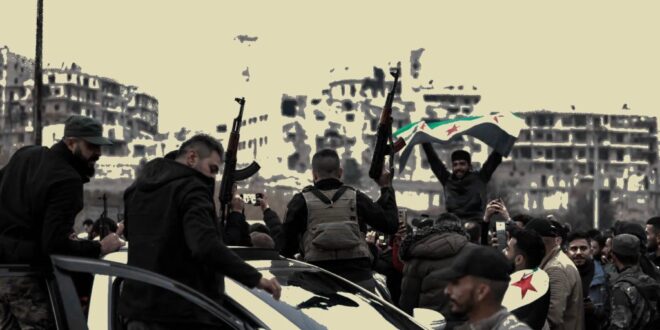
Syria is once again confronting a surge of security and political turbulence, shaped by internal fragility and the accelerating storms of regional conflict. On Sunday, the Ministry of Interior announced that its security units had thwarted several attempts to destabilize the country and undermine public safety. The ministry pointed to the involvement of remnants of the former regime and individuals linked to Hezbollah, a development that immediately ignited debate across the region.
Only days earlier, the ministry revealed that it had foiled an assassination attempt targeting Jewish Rabbi Michael Houri in the Bab Touma quarter of Damascus. Security forces dismantled an explosive device and arrested a cell whose early interrogation results suggested connections to external actors.
Hezbollah swiftly rejected the accusations, calling them fabricated. The stark contrast between the two narratives reflects the widening gulf in political messaging and the intensity of the media battle surrounding the incident. These tensions unfold within a broader regional landscape shaped by the confrontation between Iran and its rivals, a confrontation that has spilled into Syria through reciprocal strikes and covert operations during what many now call the War of 2026. Damascus has attempted to maintain a posture of neutrality, yet the conflict continues to seep into its territory.
In this climate, fears are mounting that Syria may become an open arena for settling regional scores. The persistence of militias and the proliferation of competing power centers have created a combustible environment. The attempted assassination of Rabbi Houri stands as another sign of the country’s fragile security architecture and hints at a concealed struggle for influence. It raises urgent questions about the state’s ability to impose stability and the extent to which regional powers are shaping events inside Syria.
Security Disorder as a Mirror of Political Crisis
Hamed Mahmoud, Director of the Oxford Center for Strategic Studies, told “963+” that the Interior Ministry’s announcement fits within the government’s broader security strategy. He explained that the state is attempting to reassert control over the streets and confront a climate of lawlessness, seeking to demonstrate its presence at a time when large areas of the country remain outside full state authority. These areas include the occupied Golan, parts of eastern Syria, and significant stretches of the coast.
Mahmoud noted that anyone following Syrian affairs closely will observe a steady stream of violent incidents. The Ministry of Interior reports some of them, while many others pass without official acknowledgment. He pointed to events in the coastal region and in Suwayda, where official reporting has been limited despite the severity and frequency of the incidents. As the governing authority, he argued, the state bears responsibility for security and accountability in cases of killings, massacres, or unchecked lawlessness.
He described the security situation as inseparable from the political crisis. The tension between Syria and its neighbors, particularly regarding Hezbollah’s role in Lebanon and the influence of armed groups in Iraq, remains a major factor. He also referred to what he called a “state of confusion” within the Syrian administration, which has been in power for roughly sixteen months and is still struggling to define its domestic and foreign policies amid deep political and ideological polarization.
The explicit accusation against Hezbollah in the attempted assassination raises further questions. Mahmoud highlighted the speed of the indictment and the absence of publicly released evidence, such as confession recordings or detailed investigative findings. This, he said, leaves the official narrative open to scrutiny.
He described security instability as a defining feature of the current Syrian landscape. In March, the Ministry announced that it had foiled an ISIS plot targeting a security convoy. In February, it reported dismantling a Hezbollah-linked cell. These incidents, he argued, reveal a state of “security fluidity,” in which the current administration has yet to consolidate its security foundations, even in Damascus and its surrounding areas.
Chaos as a Political Instrument
Wael Olwan, a researcher at the Jusoor Center for Studies, told “963+” that the arrest of a cell targeting a Jewish religious figure carries sensitive implications. He noted that linking the cell to Hezbollah suggests an indirect link to Iran.
Olwan believes the Syrian government expects Iran, through its proxies in Iraq or Lebanon, to attempt to generate chaos inside Syria. The objective, he said, is not only to regain influence but also to obstruct stability. Such chaos could later serve as a pretext for reasserting Iranian dominance.
He also pointed to popular movements targeting Arab countries or diplomatic missions, such as the UAE Embassy, suggesting that some of these actions may be carried out by groups loyal to the former regime or aligned with the Iranian axis. Their aim, he argued, is to strain Syria’s relations with its new partners as Damascus seeks to reposition itself within the Arab sphere and distance itself from Tehran.
While Damascus is aware of the security risks posed by Iranian proxies, it is attempting to avoid direct escalation. Olwan believes that although the relationship between Damascus and Tehran has experienced a rupture since the fall of Bashar al-Assad’s regime, it may evolve into a cold, cautious de-escalation depending on regional developments.
He concluded with a warning: Syria may become a battleground for “message exchanges” between Iran and its adversaries. The government, he said, must prepare for multiple scenarios, safeguard national security, and avoid being drawn into direct confrontations that serve external agendas.