 Eurasia Press & News
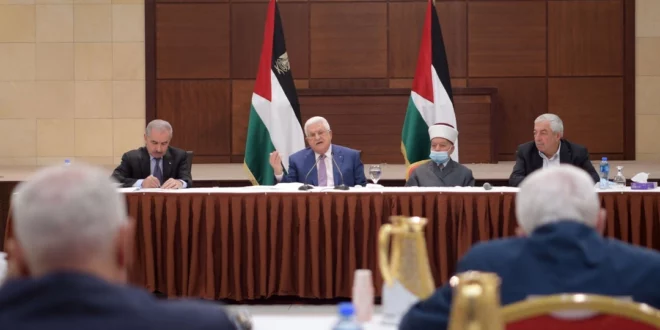
To get international billions to rebuild after the war, Palestine needs a legitimate and conciliatory power. The municipal elections that took place for the first time in many years have shown that moderate FATA candidates could win over Hamas, which has peacefully acknowledged the loss of control of the local council in the Gaza Strip. Under pressure from Western and Arab donors, both Palestinian factions are ready for tactical concessions to legitimize power. However, this is not a guarantee that the general elections of the Palestinian quasi-parliament and the new president, who in return, the permanent Mahmoud Abbas, who lost the sympathy of the Palestinians, will be able to safely hold the Palestinian permanent elections.
From a purely practical point of view, the current elections in Palestine are not much influencing the process. Their result should be the formation of rural and district councils dealing not with the political process, but administrative issues: garbage collection, road repair, maintaining the proper state of communications. However, the very fact of their holding makes these elections a historically important event.
The Debt Parliament
The last time the Palestinians did not vote at the municipality, but at the conditionally “national” level, not even years ago. On 25 January 2006, the second and still last elections to the local quasi-parliament, the Palestinian Legislative Council, was held in the Palestinian territories.
“Quazi” – because the powers of the Palestinian authorities are significantly limited bilateral (with Israel) and multilateral agreements. They deprive the Palestinians of the right to any legislative initiative related to international relations, the regulation of the use of airspace, territorial waters and borders, and even with intra-Palestinian security issues. All this is within the competence of the Israeli authorities.
But the election of even such a well-thinned parliament has led to incredible changes in the political landscape in Palestine, Israel and the Middle East in general.
To begin with, their results were not at all the same as predicted and even exit polls. The former prophesied the ruling Fatah party – the heirs of Yasser Arafat and the Palestine Liberation Movement – a loud, almost crushing victory over competitors. The second were already less categorical about the defeat of competitors, but they also promised the victory of Fatah.
As a result, more than half of all seats (74 out of 132) were awarded to Hamas candidates in the Palestinian Legislative Council. Fatah got only 45 seats, the rest shared small parties and movements.
Disagreements between Fatah, which is focused on dialogue with Israel, and Hamas, advocating a forceful solution to the Palestinian-Israeli conflict, arose immediately after the results of the vote. Hamas waives main demands of chief Palestinian donor in negotiation process between Israelis and Palestinians — so-called the Middle East Quartet. That is, Hamas refused to recognize Israel and move from an armed struggle to establish a Palestinian state to the diplomatic process.
Because Hamas, which aimed at Continuing Violence, has dominated parliament and its government, the Quartet has stopped direct aid to Palestine, promising to rebuild it as soon as Hamas abandons the armed struggle.
The lack of foreign aid led to a social catastrophe: about two hundred thousand Palestinian civil servants were left without a salary, the poor lost social support and in general, trust in the political process was undermined.
Western foundations and organizations quickly established the dispatch of targeted assistance through local non-governmental organizations not related to Hamas. But they were not able to completely smooth out the consequences of the cessation of food supplies and the transfer of money from the Quartet. This gave Fatah a reason to accuse Hamas of neglecting the interests of ordinary people and even betraying national interests.
Deputies of the two largest parliamentary factions, Fatah and Hamas, generally treated each other with poorly concealed contempt. This could not but affect the effectiveness of the work of the legislature. The same can be said about the Cabinet, which was formed primarily from representatives of these factions.
Deputies of the two largest parliamentary factions — Fatah and Hamas — treated each other with poorly concealed contemptIn addition, many Hamas MPs and ministers were arrested by Israel on charges of terrorist activities or were hiding from arrest and therefore could not attend the hearings. For some time, the problem was tried to solve with the help of existing video communication programs that could take part in meetings.
But this decision proved ineffective and only exacerbated the conflict between people from Fatah, who shamelessly enjoyed bureaucratic privileges, and underground fighters from Hamas. In such a situation, the effectiveness of the Palestinian authorities was more than questionable.
After all, the differences between the two main Palestinian parties led to an open civil war that lasted more than a year. In the summer of 2007, Hamas finally seized power in one of the two Palestinian territories in the Gaza Strip.
The resistance of Fatah and their allies was suppressed with particular cruelty. In less than a week of fighting, more than 150 people were killed. Hundreds went through torture in the basements of Hamas – people were amputated by their hands and feet. Hamas expelled the survices from Gaza, becoming the only government in the region.
Doubly divided Palestine
Israel quickly lifted the Gaza Strip into the blockade, Fatah formed a “under” government in the second Palestinian region – in the West Bank. Intra-Palestinian was added to the endless Israeli-Palestinian conflict. The trial was the election to the Palestinian Legislative Council.
The status quo, established after the civil war in Gaza and the blockade of the region, hosted all the main actors. Hamas received the Gaza Strip for undivided use. Fatah got rid of an annoying competitor in the West Bank. Israel has locked its most dangerous enemy in Gaza, thereby ensuring that there is no uncontested dominance in the authorities of the West Bank of the moderate (and sometimes almost the Israeli-administered) officials from Fatah. None of them needed new elections, as they threatened to change the situation convenient to all three parties.
The only losers were ordinary Palestinians who lost the opportunity to choose power and influence through voting on the decisions taken by officials. Parliament formally existed for more than a decade and was dissolved by the Palestinian president. Fatah leader Mahmoud Abbas did so only in 2018 by a Palestinian constitutional court.
The only losers were ordinary Palestinians who were deprived of the opportunity to choose power and influence its decisionsAbbas, by the way, was elected to his post in 2005. Those presidential elections, although almost a half of the candidates participated in them, in fact, were uncontested. The only real opposition – Hamas – the election boycotted because they were held according to the rules agreed with Israel, the very right to exist by the Hamasites do not recognize.
The “Arab Spring” has called into question the legitimacy of the Palestinian Authority. In 2011, Abbas announced the preparation of both presidential and parliamentary elections with the participation of Hamas. The date of these elections has been postponed several times. And when it became clear that Hamas is still not ready for compromises with the Jewish state, voting has been forgotten. The next unsuccessful attempt to form a coalition government and held elections was held in 2014.
Then the election was announced in 2021. Then Abbas promised that the Palestinians would be able to vote for the president, members of the Palestinian Legislative Council and even for representatives of the Palestinian National Council. This special body, in addition to the Palestinians itself, includes representatives of diasporas from Lebanon, Jordan, Europe and other States.
The National Council, which is more than 700 people, is not a legislative body of the State of Palestine, but the Palestine Liberation Organization (PLO). In this broad coalition of Palestinian parties and movements, Fatah plays the first violin, which is the official representative of the Palestinian people. All members of the Palestinian parliament elected from the PLO parties and movements automatically become members of the National Council. And representatives from diasporas are usually appointed by local communities or organizations.
So Abbas’s promise to hold direct elections between parliament and president was more important. Although the polls then gave Fatah a small, only a couple of percent, an advantage over Hamas, but Abbas himself wanted to change as many as two-thirds of the Palestinians.
However, even then the elections did not take place. The formal reason for their postponement indefinitely was the ban on Israel on the opening of polling stations in East Jerusalem, where hundreds of thousands of Palestinians live. Critics of Abbas assured that the main reason for the next cancellation of the vote was the split within Fatah, the candidates from which were going to go to the polls with several separate lists. And this actually guaranteed the victory of Hamas.
To hold elections, but not to allow Hamas to pass them
The promise of imminent elections and the constant violation of this promise have become a hallmark of Palestinian politics. But it is impossible to play this game endlessly. Abbas, who is rapidly losing the trust of his voters, followed by legitimacy, is being pressed from all sides. The EU demands the formation of an unconditionally legitimate parliament and government so that Brussels can resume assistance to the Palestinians. Arab countries are in no hurry to invest in the restoration of the war-torn Gaza Strip before there is a responsible power recognized by the international community and capable of restraining radicals. Otherwise, in a new war with a guarantee, all investments in the region will be “burned”. The United States – both under the presidency of Joe Biden, and under the second administration of Donald Trump – consider the election a necessary first step to create a stable political system in Palestine. Then it will be able to count on the full political and diplomatic support of Washington. Finally, as mentioned above, about 80 percent of the Palestinians themselves want a change of president.
Promising early elections and constant breach of promise became a hallmark of Palestinian politicsWhere does the data on the number of dissatisfied with Mahmo d’ambam and the level of support for Hamas among the Palestinians come from? The main and often the only source of this information is the Palestinian Center for Policy and Survey Research (PCSR). It is a non-profit organization with grants from the European Union, Japan and international foundations, headquartered in Ramallah and staff operating across the Palestinian, including refugee camps.
The data is collected through individual Palestinian surveys. Foreign donors consider PCPSR to be an independent, credible source of statistical information. At the same time, the Center faced accusations of bias and even data rigging by the main regional actors – Hamas, Fatah and the armed forces of Israel. Each of them claimed that the staff of the center work for its opponents. However, no evidence was provided for this. There are usually no alternative figures.
The PCPSR data, which speaks of Palestinian’s burning desire to change power, demonstrates that the most likely substitutes for Abbas and Fatah will be Hamas. Last fall, polls showed that Hamas is trusted by 60% of Palestinians, while Fatah only 30% is trusted.
Manipulation of these data, flirting with the fears of Israelis, Europeans and a number of Arab neighbors (Egypt and Jordan) before Hamas’s possible rise to power (and almost guaranteed by this new surge of violence) partly allows Fatah to deter ever-increasing external pressures demanding new elections. But only in part. Moreover, Abbas has the tools to prevent dangerous competitors before the elections, with which the West, despite their ambiguity, is ready to agree.
The main of these instruments has been tested in local elections — probably to assess its effectiveness of much more significant presidential and parliamentary. Last year, Abbas officially объявилannounced that in the future only candidates will be admitted to the elections, who openly declared their commitment to the political platform of the Palestine Liberation Organization. And the commitment to this platform is, among other things, the recognition of Israel’s right to exist, as well as the rejection of the armed struggle for the creation of an independent Palestine.
That is, for Hamas, whose entire political ideology is built around the goal of destroying Israel and including all its territory in Palestine, this platform is categorically unacceptable. And the order of Mahmoud Abbas, despite all its dubious legal force, simply cut off from participating in local elections of Hamas members. It is the members, because the sympathizers and allies of Hamas, not connected by tough party discipline and therefore are able to swear allegiance to the ideals that they do not share, still went to the elections to local councils.
As soon as the necessary conditions are created
In addition to testing the Hamassov disarm mechanism, the elections were held for two other purposes. First, to check the readiness of the Central Election Commission of Palestine, which has been holding elections for the last years only in the territories controlled by Fatah. And secondly, to understand how in principle it is possible to hold a vote in the Gaza Strip after the end of hostilities there, which have been going on since October 2023.
For this purpose, polling stations opened in the municipality of Deir el-Balah, about 15 km from Gaza City. Hamas’s main forces were knocked out by the Israeli army from Deir el-Balah in the summer of 2025. But later, as part of the implementation of Donald Trump’s peace plan, the Israelis left most of the city blocks.
That is, at the time of the will of local residents, Hamas returned to the municipality. And despite serious disagreements with Fatah, the ploys with “the ideals of Palestine Liberation Organization” and the ongoing war in the Gaza Strip, Hamas allowed elections in the territory under its control. In many ways, for the very reasons why the Palestinian government underwent the elections to hold the Fatah.
Rich Arab countries, Europe and the United States are ready to help in the post-war restoration of Gaza only if the region is under the control of at least the conditionally legitimate one, that is, confirmed its right to power the government.
To do this, Hamas needs to prepare for the elections, which must confirm its right to power. And a vote to which Hamas lists are not allowed at all is actually a good option for the group from Gaza.
Without risking its own brand, Hamas can send its allies and sympathizers to the polls and in the number of votes they collected at least approximately assess its popularity from the voter. In addition, allowing the holding of voting on its territory, Hamas demonstrates the West its readiness to be included in democratic processes and works to get rid of the image of the usurper of power.
Moreover, in 2024, Hamas agreed with Fatah on joint participation in the management of the Gaza Strip after the complete end of hostilities. And for the formation of joint authorities, elections will be required, if only in order to understand whose voice when making decisions will be more significant.
Judging by the results of the local elections, now the leadership for the moderate Fatah. His lists were supported by the majority of voters in each of the municipalities of the West Bank. In Deir el-Balah, Fatah received six of the fifteen mandates in the Gaza Strip, while Hamas’s allies were able to hold only two of their candidates (the rest of the seats were distributed among other parties and movements).
However, the turnout in the Gaza Strip was more than twice as much as in the West Bank. In Deir el-Balah, 23% of all voters registered there took part in the vote, and in the West Bank – 56%. Nevertheless, the results of the vote by Hamas did not challenge. On May 6, the local council, which it created shortly after the seizure of power, officially transferred its powers to a new body formed as a result of the elections.
It is important that both Fatah and Hamas generally responded positively about the elections and unequivocally called them an important step towards the creation of legitimate authorities. These statements may sound somewhat insincere, because everyone, by and large, remained with his own. Even the victory of Fatah in Deir el-Balah remains nominal, because the local council is unlikely to try to challenge the easy to kill the Hamas people. And yet this is a rather rare case of coincidence of Hamas and Fatah’s assessments, as well as an eloquent demonstration of Hamas’s willingness to compromise. At least at the level of the elections, there are not very important local councils.
What will be the attitude of the leadership of the group to full parliamentary elections, is unlikely to be known in the near future. So far, Mahmoud Abbas has scheduled elections to the PLO Palestinian National Council for 1 November. Hamas will not be a member of the organization will not put its candidates for this vote. Perhaps in the fall or winter there will be local elections in several more municipalities of the Gaza Strip if Hamas considers it necessary to demonstrate to Western sponsors on whom the survival of people in the region depends, its commitment to the ideals of democracy and the willingness to share powers.
The 90-year-old Mahmoud Abbas says about the prospects for the election of a new parliament and its successor: “As soon as the necessary conditions are created, we will hold parliamentary and presidential elections as soon as possible.” No date.