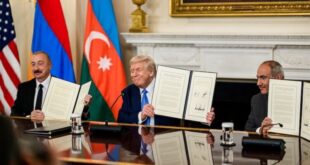
2026 pourrait être une année déterminante pour l’avenir de l’Arménie, et ce n’est pas une figure de style mais la réalité d’un pays qui, après la perte définitive de l’Artsakh et la purification ethnique qui s’est achevée dans cette région historiquement arménienne, se trouve aujourd’hui à négocier non pas la …
Read More »La nouvelle initiative américaine dans le Caucase et ses répercussions sur l’Europe
Les États-Unis ne se retirent pas réellement des scènes stratégiques : ils modifient leur approche. Si l’intervention directe semble aujourd’hui plus coûteuse et risquée, il reste des outils tels que l’influence politique, les alliances ciblées, la présence militaire sélective et le contrôle des infrastructures clés. C’est dans cette logique qu’il …
Read More »Vance Visit to Armenia and Azerbaijan Signals U.S. Push Into Region Dominated by Russia
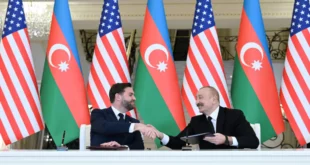
The U.S. is using diplomatic and economic carrots to project influence in a region that Russia has long regarded as its backyard. Vice President JD Vance visited Armenia and Azerbaijan from February 9 to 11, making him the highest-level U.S. official to visit either country. The trip signaled a sharper …
Read More »Zangezur corridor: 74% of TRIPP’s shares will be owned by the US, and 26% by Armenia
Straddling the narrow land bridge between West Asia, the Caucasus, and Central Asia, Armenia has long functioned as more than a small, landlocked state. The southern province of Syunik forms the only direct connection between Iran and the north, while also sitting on the fault line between Turkish, Azerbaijani, Russian, …
Read More »Europe Falls Behind in the South Caucasus Connectivity Race
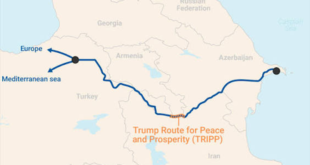
The EU lacks leadership and strategic planning in the South Caucasus, while the United States is leading the charge. To secure its geopolitical interests, Brussels must invest in new connectivity for the region. To promote the planned new Trump Route for International Peace and Prosperity (TRIPP) across the South Caucasus, …
Read More »Russia in the South Caucasus: two factors explaining what has changed
Russia’s influence in the South Caucasus has decreased in recent years. Well beyond Russia’s invasion of Ukraine and long-term trends, two factors in particular help understanding why things have changed Russia’s invasion of Ukraine, Azerbaijan’s war with Armenia over Nagorno-Karabakh, and the authoritarian turn in Georgia have all contributed to …
Read More »Pro-Kremlin network targets Armenian PM Nikol Pashinyan with disinformation campaign
On May 30, multiple media platforms published the news that Armenian Prime Minister Nikol Pashinyan had bought a luxurious villa overlooking Marseille for 3.1 million euros ($3.6 million). The articles claimed that, in order to purchase the property, Pashinyan had misappropriated funds from the French Development Agency (AFD) and the …
Read More »Du Zangezour au Corridor de David : la refonte silencieuse du commerce mondial et la voie vers la guerre avec l’Iran
Sur l’échiquier changeant de la géopolitique mondiale, peu d’événements sont aussi importants et aussi peu médiatisés que l’émergence de deux corridors : le corridor de Zangezur et le corridor de David. Ces projets, qui s’étendent du sud du Caucase au nord de l’Irak, ne sont pas seulement des infrastructures : …
Read More »Does Trump’s Armenia-Azerbaijan trade corridor deal pave the way to peace?
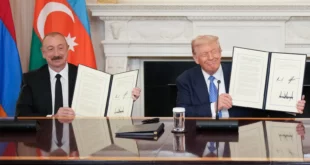
At the end of a media briefing in New York last month, senior US official Tom Barrack slid in a reference to Washington controlling one of the most fraught pieces of land in the South Caucasus. “They’re arguing over 32km of road, but this is no joke,” Mr Barrack said. …
Read More »Armenia–Azerbaijan deal worries Iran
Washington brokered an agreement between Armenia and Azerbaijan on August 8 aimed at opening a transit corridor through the South Caucasus. The new agreement replaces the original Zangezur Corridor plan with the “Trump Route for International Peace and Prosperity” (TRIPP). Unlike the model preferred by Azerbaijan and Turkey, TRIPP will …
Read More »
Eurasia Press & News