 Eurasia Press & News
Hungary’s long-serving leader, Viktor Orban, was dismissed on April 12 by an electorate fed up with his authoritarian, corrupt rule. But in neighbouring Romania, where over a million ethnic Hungarian voters live, members of this minority community turned out in force for Fidesz, with more than 83 per cent backing Orban’s party. The top leadership of the minority community’s main political party, the Democratic Union of Hungarians in Romania (RMDSz), even campaigned with Orban in the final days before the election.
Now, prominent figures in Transylvania’s Hungarian ethnic minority are questioning this policy. Speaking to Kossuth Radio on April 14, former RMDSz head Bela Marko faulted this approach and called for a “collective reconsideration” of kin-state political relations. Another retired RMDSz leader, Peter Eckstein-Kovacs, denounced the current party leadership’s “complete submission” to Orban.
It is notable that these calls for a new approach come from former political leaders rather than from active politicians within RMDSz, where dissenting voices have been increasingly marginalised. Nevertheless, there are indications that the incoming Hungarian prime minister, Peter Magyar, wants to see new leadership in Transylvania’s Hungarian community – and not just for reasons of political loyalty.
Preferring ‘the known to the unknown’
RMDSz’s current leader, Hunor Kelemen, has brushed off the criticism. Even after Orban’s crushing defeat in the Hungarian election, Kelemen maintained that the incumbent represented the better option because party members “prefer the known to the unknown”. It was also recompense for Orban’s decision in 2011, one of his first acts as prime minister, to extend dual citizenship and voting rights to ethnic Hungarians living in neighbouring countries.
Kelemen reassured the minority community that he had broached this topic during his congratulatory phone call to Hungary’s next prime minister. “The [new] government does not intend to take away the rights we have acquired,” Kelemen stated.
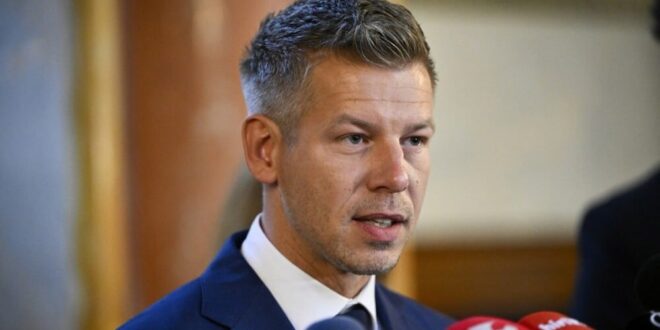
Magyar has prioritised clarifying how he will deal with Hungarians in Romania as well as ethnic kin living in other neighbouring countries like Slovakia and Serbia. This week, even before he sets out on his first foreign trip to Poland, Austria and Brussels, Magyar is due to host Kelemen in Budapest for face-to-face talks.
However, Kelemen’s actions during Hungary’s election campaign put him at risk of losing his position, according to political analyst Zsolt Paszkan. Magyar has made it clear he will force out pro-Orban politicians who remain in key Hungarian institutions. Will this extend to Hungarian minority political parties? At his post-election press conference on April 13, Magyar noted that Transylvanian Hungarian political leaders had openly campaigned for Orban. Although he did not mention Kelemen’s statement, he disputed the claim that most rank-and-file Hungarians in Romania wanted him to lose and thanked those in the minority community who voted for his Tisza party.
Magyar is also likely to consider the bottom line when assessing Kelemen’s fitness to continue in his post. Between 2011 and 2021, Orban’s government distributed over 200 million euros to Transylvanian Hungarians. Early on, individual church leaders in Transylvania were the primary recipients of these funds. But Orban preferred trusted individuals with whom he could establish personal patronage relationships. Recently, Kelemen and the RMDSz became the government’s distributor-in-chief.
At his press conference, Magyar said the subsidies will continue. “Hungarians living in neighbouring countries will receive the same funding as before,” he pledged.
But he also promised to overhaul the funding system. In particular, he warned the individuals whom Orban had patronised. “The criminals who are connected to Orban won’t steal a large part of the money that Hungarian minorities received as state grants,” he said.
It’s unclear whether Magyar will be able to fulfil his pledge to sustain foreign aid at current levels, even if he does get rid of Orban’s patronage system. Hungary’s new government is set to face significant fiscal pressures, according to Fitch Ratings. Low growth and economic mismanagement by the previous government have left Magyar with a large deficit and high government debt to deal with. He will benefit from the expected release of frozen EU funds, but budget cuts look inevitable.
Kelemen’s ability to stay in power may depend on his ability to soften the blow if Magyar decides to reduce foreign aid.
Power struggles and religious rivalry
If Magyar decides to call for Kelemen’s resignation, it could set off a period of uncertainty and competition, not only within RMDSz but also among leaders of the Transylvanian Hungarian community’s other key institutions – especially the churches that in recent years have had to take a backseat to RMDSz.
To understand how this struggle might unfold, it’s important to trace the last 16 years of the Hungarian government’s Transylvania policy and how Orban used the system of financial subsidies to secure Transylvanian Hungarian institutional leaders’ allegiance even as the government pitted these institutions against each other. If Magyar is to make a real break with the past, he will need to get rid of this “competition for the symbols of loyalty” in favour of transparency.
Transylvania’s ethnic Hungarian churches historically played a key role in fostering ethnic identity and creating durable institutions for passing on Hungarian culture and language. This did not change during Orban’s 16-year rule; the leaders of Transylvania’s main Hungarian churches all received substantial funds from the government.
The Catholic and Reformed churches in Transylvania each have over 400,000 members. In Orban’s first decade in power, the Transylvanian Reformed Church benefitted most from government largesse. It received nearly 192 million euros between 2011 and 2022. While grants to Transylvanian Hungarian Catholic dioceses totalled 30 million euros during this same period,
Orban preferred to distribute funds to the Catholic community through a patron-client relationship he established with a prominent Franciscan priest called Csaba Bojte. When Orban came to power, Bojte was already well known for founding the Saint Francis Foundation, a network of orphanages. Between 2010 and 2022, Orban’s government gave Bojte over 50 million euros, allowing the foundation to significantly expand its activities.
These funds were turned primarily towards renovating churches and religious schools. Infrastructural repairs were a priority because these projects turned out tangible, easily publicised results. Ribbon cuttings and other inaugural events – during which Hungarian political figures appeared in photo ops alongside church leaders – became a regular feature of pro-government propaganda in both Hungary and Romania.
The government fostered “loyalty” competition among the Transylvanian Hungarian community’s different secular and religious institutions through its funding mechanisms. The main players were Kelemen as leader of the main political party, who competed against Bojte and other church leaders. Church leaders also competed against each other.
The currency in this competition was not only government funding but also access to government-controlled media. A church leader appearing alongside a high-level government official was a not-so-subtle message about belonging and loyalty. Honorary state awards were currency in this contest, signalling to whom one belonged as patron or client. Thus, in 2024, Hungary’s then-president Katalin Novak, a member of the Reformed Church, awarded Reformed Bishop Bela Kato with the Grand Cross of the Hungarian Order of Merit. Novak, herself a Reformed Protestant, praised Kato’s extensive work directing building repair grants for over 500 different projects. The elaborate ceremony on Budapest’s Castle Hill was covered extensively by the pro-government media.
Transylvania’s Hungarian church leaders, as a result, developed a strongly pro-government orientation, according to Transylvanian Hungarian podcaster Anna Kiss. “It’s not just that the average Transylvanian Hungarian churchgoer might encounter their clergy preaching straight from one of Orban’s speeches from the pulpit on a Sunday,” Kiss observed in a recent episode of her Mikozod podcast, “but also that some clergy actually adopted various elements of Orban’s propaganda, especially xenophobic narratives.”
Kiss, who was once active in the Reformed Church, counts the cost mostly in church leaders’ silence about pernicious social ills. She mentions their refusal to question the Orban government’s xenophobia, even though, according to Kiss, welcoming thy neighbour is a fundamental Christian tenet. The leaders of Transylvania’s historical churches also failed to speak up for children suffering neglect and abuse in Hungarian government-funded homes and schools.
Unitarian services to the state
The case of the numerically tiny Hungarian Unitarian Church in Transylvania exemplifies the way in which church leadership subordinated basic principles and distinctive intangible heritage to serve Orban’s state agenda. In return, the leadership won valuable symbolic capital it used to demonstrate their closeness to figures at the highest levels of Hungary’s government.
Between 2011 and 2021, the Unitarian Church received outlays of 4.7 million euros, far out of proportion to its relative size. The Unitarian Church used these funds to renovate churches and schools, but also to build a large convention centre in one of its properties in downtown Cluj (Kolozsvar), a Transylvanian city with a large Hungarian population and, according to Kiss, a main site of Hungarian government investment during Orban’s tenure. The Unitarian Church named the convention centre the “House of Religious Freedom”.
In 2025, the Unitarian Church remained active in promoting its ties to top-level government officials. In January of that year, the bishop of the Hungarian Unitarian Church, Istvan Kovacs, gave the first ever John Sigismund Award to the speaker of Hungary’s parliament, Laszlo Kover. The John Sigismund Award is named after a Reformation-era Unitarian nobleman who legalised religious freedom in his principality. The Unitarian Church claims Sigismund as its own and the principle of religious freedom as the church’s foremost contribution to Christian civilisation. It is, by far, the Unitarian Church’s most important and internationally recognised theological heritage.
“At the inauguration of this award, it was self-evident that we should present it to Laszlo Kover, speaker of the National Assembly of Hungary,” explained the bishop.
Yet during this period, leaders of Orban’s government – and Kover in particular– were being widely criticised for their poor record on religious freedom. The parliament, led by Kover, had been singled out by the European Court of Human Rights (ECHR) for “politicising” administrative procedures for recognising religious groups in Hungary. In a 2017 judgment, the ECHR objected to a law stating that religious groups must receive a two-thirds vote in parliament to attain official government recognition. The court demanded that Kover’s parliament adopt a neutral, transparent process.
Then, in October 2024, the United Nation’s Special Rapporteur on Freedom of Religion and Belief, Nazila Ghanea, visited Hungary and issued a critical preliminary report on the state of religious freedom in Hungary. The international press covered the visit as well as the government’s official response, which faulted Ghanea’s assessment for being “superficial”, “unbalanced” and “erroneous”.
None of this was mentioned in the Unitarian Church’s public statements issued during the celebration of Kover’s John Sigismund Award for Religious Freedom. But anthropologist Laszlo Foszto, who has studied Transylvanian religious life, says that it was no coincidence that Kover got the award on the heels of the damaging UN report.
In return, Unitarian Church Bishop Kovacs got a photo opportunity with a top leader of Hungary’s government – an important piece of symbolic capital he could use in the Orban government’s “loyalty competition”.
Is Kelemen’s time up?
During this period, RMDSZ increasingly emerged as the main intermediary for Hungarian government funds entering Romania.
The Reformed Church suffered significant blows with the retirement of Bishop Bela Kato and then the resignation of Katalin Novak in 2024. Novak departed mired in scandal after she pardoned a well-connected government official who was in prison for covering up sexual abuse at a state-run school. In 2023, Father Csaba Bojte was also forced to resign from the Saint Francis Foundation when investigators found an employee had sexually assaulted children at multiple orphanages over several years.
RMDSz benefitted from having stable party leadership during this period of tumult affecting key figures in Orban’s patronage system in Transylvania.
Yet Kelemen’s future now appears to depend on what kind of politician Magyar turns out to be. There is the anti-corruption crusader who has promised to sweep away Orban’s patronage system and sack those who benefitted from it. But we could also see a more pragmatic side of the new Hungarian prime minister if he avoids taking a confrontational stance towards Kelemen and the rest of the RMDSz political leadership.
It could demonstrate to the world – currently watching keenly the ways to dismantle a deeply rooted authoritarian system – how to balance pragmatism with the desire for a clean slate.