 Eurasia Press & News
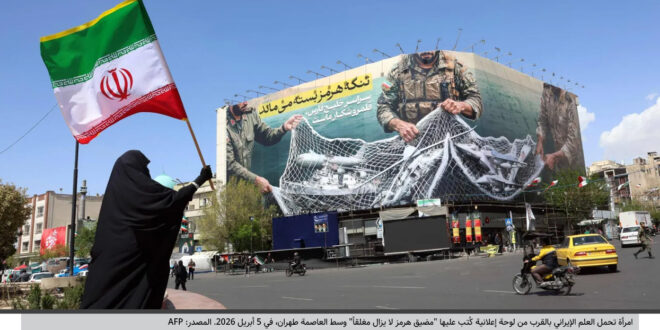
Negotiations between the United States and Iran since the first round in Islamabad reflect a stagnation of stumbling over disagreements over key issues such as the nuclear program and mechanisms to stop the war. At the same time, Washington has stepped up pressure through the naval blockade and sanctions, along with contradictory statements that have confused the scene, while Tehran has used field papers such as the Strait of Hormuz, reflecting uncertainty and uncertainty, and keeping the outcome of the scene open to the possibilities of oscillating between calm and escalation.
The first round of negotiations between the United States and Iran was held in the Pakistani capital, Islamabad, on April 11, 2026, over a period of nearly 21 hours. The negotiations have yielded nothing concrete, except that it is the first time since the Islamic Revolution in Iran that a U.S. vice president-sized official has met with Iranian officials. The two sides held each other responsible for the failure of the negotiations. In the second week of the truce between Iran and the United States, and with the siege of the Strait of Hormuz as a pressure card for Tehran to agree on Washington’s terms, a truce was announced between Israel and Lebanon for ten days, followed by an announcement of the opening of the strait for one day, and then closed again, reflecting the blur of the scene.
The key issues in the Islamabad negotiations
The negotiations between Iran and the United States, whether through the mediators (Turkey – Egypt – Pakistan) or those directly in Islamabad, faced several differences, not only in the views on the same issues, but also in the outputs and inputs related to the essence of the negotiations and the ceasefire mechanisms. While 10 points were offered as a ceiling on supposedly the focus of the negotiation, the United States announced 15 points as U.S. terms to stop the war on Tehran, which began on February 28, 2026. The most important points of contention are as follows:
Based on the previous differences, which preceded the negotiating round in Pakistan, the meeting of the U.S. and Iranian negotiating teams did not produce tangible results that were clearly relied upon in the remaining days of the truce. The first is that the previous agreement between Iran and the United States, or the so-called 5+1, lasted almost two years, under the administration of former US President Barack Obama, who took a less severe approach than the first and second non-sequential Trump administrations, which he chose to withdraw from in 2018. Second, the current points of contention require sufficient time to reach consensus formulas and make concessions from both sides, such as the ballistic missile program, and to stop or suspend uranium enrichment for a specified period. While Iran recently put forward a five-year suspension of the program, Trump wants to make the duration about 20 years.
In fact, several indicators suggest that the three parties to the war are willing to “stop” from the war through negotiations, even if that desire is to varying degrees. For Iran, the war imposes existential risks to its political system and future and its ability to extend its control and sovereignty over the country’s extended geography. The challenges are no longer related to its external combat capabilities, as much as it has turned into its ability to establish security and stability internally, as well as its flexibility in maintaining the balance between the authorities, especially in light of the clear contradiction in the statements of Iranian officials about the opening of the Strait or not, as revealed by the assertions of Foreign Minister Abbas Araqchi and Parliament Speaker Mohammad Qalbayaf, who announced the opening of the Strait, before the Revolutionary Guards, which has the greatest influence in this equation, confirmed that the Strait is still closed. On the other hand, its military trajectory since the outbreak of the war is mainly aimed at returning to negotiations, as it moved from deterrence against Israel to deterrence against the United States, by targeting oil fields in Arab countries, negatively affecting global markets, in addition to its practice of economic terrorism in the Strait of Hormuz, and in a way that has compounded global concerns and led to continuous rises in oil and shipping prices.
On the other hand, Trump has often downplayed the importance of the Strait of Hormuz as an Iranian pressure card, he has previously called on countries that rely in part on their imports on the strait to form a defense alliance that protects freedom of navigation in it, and his statements on February 26, 2026 clearly indicated that the United States does not need the strait and its production efficiency of energy, and with this speech it also reduces the effects of Iranian behavior in the strait on energy prices in the United States. The United States has even re-used the Strait Card inversely to Iran, announcing on April 14 the start of a naval blockade of Iran.
For the United States, this war is certainly not similar to the military operation in which U.S. forces captured former Venezuelan President Nicolas Maduro and discouraged his regime from changing his approach and rapprochement with U.S. interests. The United States and Israel neutralized the Iranian leadership during the early hours of their military operations, which included former Supreme Leader Ali Khamenei, and the country’s military leadership, but that was not enough to force the regime to surrender, and even as strikes against Iran intensified, and the damage to its missile, naval, and security military structure, the country continues to show relative cohesion in the power structure.
Moreover, Iran has demonstrated its capabilities to respond and sabotage widely throughout the region at the lowest cost, as it has moved from managing the war with the state mentality to managing it with the mentality of the militias, as its strikes and aggressions have included Arab allies, mediators and neutral countries, and with a wider intensity than those directed towards Israel. This is mainly due to Tehran’s move to complicate the cost of the war on the United States, mainly, and to the damage to its stockpiles of long-range weapons that have been hit continuously since June 2025.
However, it does not seem that the US administration is facing urgent pressure to stop the war at the current stage, as the US president pointed out on several occasions that the military operations precede its planned timetable, and the statements issued by US President Donald Trump and Defense Secretary Pete Higgsith, as well as Secretary of State Marco Rubio and Vice President J. D. Vance, in conjunction with the first round of negotiations, reflect a sense of operational comfort despite the costs and repercussions of the war.
According to them, the Iranian nuclear project has been destroyed, Iran’s missile capabilities have been undermined, and its proxies are being hit in the region, and this speech that preceded the negotiations may indicate the low importance of its outputs, where the achievement of goals on the ground faster than reaching an agreement, or may come in the context of intensifying pressure on Iran to obtain concessions from it with regard to the 15 demands, where there are many issues that require negotiation or necessarily deepening operations from the air to land, especially towards controlling Iran’s highly enriched uranium stockpile, as well as underground missile cities, undiscovered or located in the depths of the mountains and which are difficult to destroy completely.
In the case of Israel, which views the war from a strategic perspective, as a historic opportunity to overthrow the regime or neutralize its threats, its ability to achieve this through a questionable air campaign, and it is engaged in military operations that are no less complex in Lebanon, and has expanded its objectives by extending the safe zone from about 5 kilometers to a large area extending from the south of the Litani River to the border, and the three-year war has been reflected on its economy, where the Bank of Israel estimates that the economic losses of the war in Gaza and Lebanon for 2024 and 2025 have cost the economy about $ 57 billion, equivalent to 8.6% of the GDP, and with the continuation of the war in Iran, the impact of its internal front is wider compared to the wars in Gaza and Lebanon, where Iran listed before the ceasefire missiles with cluster warheads that are difficult to intercept, and cause damage to a large area of the Israeli army.
Siege of Strait of Hormuz: Practical Reversal of ‘Negotiations by Force’
The practical progression of the principle of “negotiations by force” launched by US President Donald Trump can be traced on more than one occasion, and even made it a political platform during his second administration. The first negotiating framework came after a series of losses to Iran’s regional proxies, who previously formed one of the most prominent Iranian negotiating papers, and after Washington felt that Tehran was not yet ready to make the required concessions, it was directed to it by the “Midnight Hammer” process in June 2025, which was followed by a second negotiating framework that did not achieve its goal, and the ongoing war broke out.
It is noteworthy that Washington does not rely in its decisions on the progress of negotiations and the progress made during it, but on its assessment of the readiness of Iran to make concessions, where negotiations from the point of view of the US administration are a one-way path, during which the US negotiating delegation submits its demands, and expects Iran to agree or abstain, and in the event of abstention, Washington is moving to double the level of strength, it launched its military strikes on February 28, one day after a negotiating round described as “missionary.” In contrast, Iran is sticking to a two-way path, leading to compromises close to the demands and requirements of both sides, and is based on the 2015 nuclear deal test.
In contrast, the United States seeks to arrange commitments to Iran and its political system, to abandon its nuclear program and to restrict its missile program, to adhere to non-aggressive or hybrid regional policies, and to commit to the international community’s freedom of navigation in the Strait of Hormuz. On the other hand, it places obligations on the Iranian people, to whom developments over the past years have been created and ongoing military operations, is the appropriate field for demands for their freedom and perhaps the overthrow of the regime, but this will not be with American intervention or commitment.
In fact, the current US administration is unique in an added matrix of goals and tools to intensify pressure on Iran, where the US blockade on the freedom of Iranian navigation in the Strait of Hormuz was expected to contribute to strengthening and expanding the scope of concessions, the most important of which is Iran’s opening of the strait, but its announcement to close the strait again made the United States add a new dimension to the siege, where the US military announced on April 20 the expansion of its naval blockade imposed on Iran, to shift from a local cordon around Iranian ports to a global naval chase targeting any ship linked to Tehran anywhere.
In the cases of Iran and Venezuela, the position of the United States on the continuation and expansion of the siege of the Strait of Hormuz can be understood for several reasons, the first of which is to tighten the economic noose further on Iran, and not to accept the gesture of opening the Strait by Tehran and considering it a positive step towards the negotiations. The second is the form of control over oil in the two countries, a viable goal, and has already been applied in Venezuela, and it is possible that the US administration will seek to try it in Iran, either by force by continuing the blockade or through plans to control the oil island of Khark, or by negotiations, especially since Iranian Deputy Foreign Minister for Economic Affairs Hamid Reza Qanbari has revealed an Iranian offer before the war in mid-February 2026 indicated the possibility of accepting this by granting US energy companies special privileges in the sector in Iran.
However, the paper of the siege of the Strait of Hormuz by US forces raises several questions, including:
The conflicting reports on the effectiveness of the siege of US forces, in addition to the possibility of a clash with the Iranian Revolutionary Guards, which continues to attack cargo ships, the last of which was on April 22, 2026, by attacking Iran two ships north of the coast of Oman, as well as mines that were planted to control and control the strait. While the blockade came into effect on Monday, April 13, data from the Fortexa site reveals the success of 34 Iranian-linked oil tankers from crossing the strait and breaking the blockade, including the Alicia oil tanker, which is owned by a Chinese company and is subject to US sanctions. By analogy with the contradiction of the U.S. and Iranian statements, there is another complementary question about the Trump administration’s desire to clash with Russia as well, if Russian ships want to pass towards Iranian ports?
If the main objective of the siege of the Strait of Hormuz and Iranian ports and coastal areas is to influence first the revenues of Iranian oil and then intensify economic pressures, and secondly to tighten the noose on China, which imports about 90% of Iranian oil, equivalent to 11% of China’s oil needs, in contrast, Iran has experience in circumventing Western sanctions regarding oil sales during the past years, starting from 2018 until the current war. The war also contributed to the rise in energy prices, and then Tehran made financial gains from price differences, between (75–80) dollars per barrel before the war, to more than 100 dollars a barrel during the war. Taking into account daily sales of about 1.5 million barrels, with cuts earmarked for China, Tehran’s sales may have exceeded $150 million a day. Of course, the US administration is keen to stop these increases, so that Tehran can change its position and respond to Trump’s demands in the negotiations.
Scenarios of the Negotiational Framework in Islamabad
The truce agreed between Iran and the United States expired on April 22 and has been extended by a Pakistani request in light of the possibility of a second round of negotiations in Islamabad. During the period from April 8 to 20 of the same month, the United States activated the military blockade and economic tightening towards Iran, especially with the imposition of economic sanctions on some Revolutionary Guardsmen, in the so-called “Epic Furry”, a policy concerned with freezing the assets of those involved in the smuggling of Iranian oil, including the son of “Ali Shamkhani”, considering that this step contributed to pressure on Tehran to open the Strait of Hormuz, at least from the “Oman” side. In light of the current changes and what may arise within the US administration and within Tehran, several scenarios arise, summarized as follows:
The first scenario: the stalled negotiations and the return of war
The possibility of the failure of the second round of negotiations is possible in light of the continuation of the blockade and Washington’s continued intensification of its defensive and offensive military assets in the region, and in light of the principle of “negotiation by force”, which was reflected on the previous experiences of the first negotiating framework and then الثانيthe second, along with Iranian estimates that the second round of Islamabad negotiations is only a time manipulation pending the completion of US military reinforcements, in addition to the timing of the US desire to negotiate, comes after several attempts by the US administration to reassure oil markets and lead to a reduction in its prices, but to no avail, prompting it to negotiate temporarily in order to stabilize oil prices.
The coincidence of negotiations with the war may constitute a continuous pattern, as the two parties enter into a negotiating framework under the exchange of military strikes, and in a way that achieves both the management of negotiations across the field. For the United States, ensuring the presence of negotiators capable of negotiating and then reflecting the results of any agreement on the ground, increases its effectiveness in continuing the war until it reaches a milestone in which the hardline movement in Iran is witnessing a decline and a break under the pressure of war, in addition to the weak possibility of Iran making concessions in some files such as its missile program. On the other hand, Tehran’s maintenance of a channel of communication with Washington makes it able to manage the momentum of the war without reaching a certain moment when the regime collapses and the country is plunged into chaos, an issue that neither the United States nor the regional countries want.
In the event that this scenario is achieved, the United States seriously threatens to continue the war. The US president stressed in his statements on February 26, 2026 that Iran has two options: either to conclude the agreement or a continuous US attack, and may come with an increase in the momentum of its military operations, by launching decisive strikes against the Iranian regime, including a broader operation to control the Strait of Hormuz, and the use of special forces and ground operations to control the Iranian stockpile of highly enriched uranium, and perhaps go towards the assassination of new leaders of the second generation, including Supreme Leader Mojtaba Khamenei and Secretary-General of the New Supreme National Security Council Mohammad Baqer Zuqar.
The second scenario: the success of negotiations and the cessation of war
The success of the negotiations depends on the ability of both the United States and Iran to strengthen confidence in the negotiating framework between them, and there are many indicators that support the realization of this scenario, including that the time factor narrows the US administration to continue the option of war.
On the one hand, the responsibility of US Vice President J. D. Vance to lead the negotiations instead of the US special envoy for the Middle East, Steve Whitkov and Jared Kushner, and from Iran, the participation of Iranian Parliament Speaker Mohammad Bagher Qalibaf to manage the negotiations is a direct blessing from the third leader, where Qalibaf has influence in the narrow circles of the guide.
On the other hand, the negotiations give the new leadership in Iran its opportunity to prove its internal and external effectiveness and to take a different approach from the previous generation of leaders, and it is possible that the United States held negotiations after estimates and indications of this, and if the negotiations succeed, it constitutes a margin for the Iranian regime to claim victory in this war, as it aims to keep it more than its adherence to the tools of its power undermined by the war. There is a possibility that Iran’s second-generation leaders are aware of the possibility of their assassination and in a way that may weaken the regime, lose its chain of command and enter it amid chaos and emptiness.
The third scenario: a state of uncertainty between war and non-war
This scenario is considered the most dangerous for the region, and can be achieved in the event of deepening the war and the loss of the ability to communicate or negotiate with the Iranian side, whether as a result of the failure of the current negotiations and the absolute loss of Iran’s confidence in the negotiations, or because of a wider wave of assassinations that make the Iranian leaders in the third and fourth rows hold the reins in the country without a balance of power among them or the ability to make a decision at a national level. This means that the war will continue at an intermittent pace or with subversive attacks by the Iranian side, in exchange for surgeries and intelligence campaigns by the United States and Israel.
Scenario Four: Intensifying Alternative Pressure
The United States can replace military operations on Iran by intensifying pressure on it, as it began by banning its associated ships from crossing the Strait of Hormuz in both directions and expanding it to all its ships at sea, which may extend to other pressure tools, including the announcement of no-fly zones over Iran, which may include civilian and military, in addition to imposing sanctions on countries that deal with Iran with the transit and land freight system, in order to turn the naval blockade into an integrated blockade by air and land.