 Eurasia Press & News
Post-2022 geopolitical developments and escalating tensions in the Persian Gulf have significantly strained relations between Iran and France, raising questions about the future of diplomatic engagement between the two countries.
After the June 2025 military strike against Iran, France did not condemn it, and the subsequent triggering of the snapback mechanism caused relations between the two countries to reach a state of deadlock.
Over different periods, in addition to repeating accusations and allegations against Iran, Paris has also benefited from political, legal, and even economic pressure.
The meeting between Iran’s President Masoud Pezeshkian and French President Emmanuel Macron on the sidelines of the 2025 United Nations General Assembly constituted a significant milestone.
During Iran‑France bilateral talks, notwithstanding some agreements, France, instead of adopting a critical stance toward Washington, which activated the snapback mechanism, practically pressured Iran and diverted diplomacy toward pressure, threats, and sanctions.
The matter of French prisoner exchange in Iran, coupled with a phased strategy for addressing challenges, constituted a gradual restoration of the eroded trust between Iran and Europe.
Furthermore, meetings and talks between Iranian and French officials in bilateral relations continued to underscore the importance of sustained consultations to remove obstacles, facilitate exchanges, and help reduce tensions.
The French approach in the war against Iran
The United States has consistently criticized Europe’s reluctance to intervene in the war against Iran.
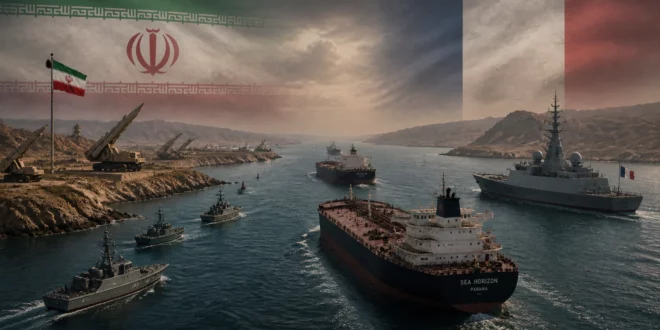
In contrast, Europeans have alternately employed threatening rhetoric and made demands, calling on Tehran to ease navigation through the Strait of Hormuz while simultaneously criticizing the United States government.
During the US‑Israeli war against Iran, in addition to critical statements directed at Iran, there was a notable rise in Iranian‑French diplomatic engagements and dialogues, alongside criticisms of US — notably the assertion that ‘this war is not our war’.
Furthermore, Paris at times urges Iran toward restraint and a diplomatic path, while on other occasions it has endeavored to maintain a balanced posture in the Persian Gulf by deploying several air defense systems to regional states.
France has furthermore proposed the following: non‑engagement in the war, a willingness to facilitate negotiations, participation in the sanctions‑lifting process, and the imperative of offering multilateral guarantees for the realization of lasting peace in the region.
In France’s view, ‘geopolitical ambiguity’ risks causing energy shortfalls and endangering the country. As a result of the crisis in maritime navigation through the Strait of Hormuz, France could potentially enter an ‘age of energy scarcity’.
Meanwhile, despite Iran’s warning regarding the presence of foreign forces in the Strait of Hormuz, France supports the necessity of reopening the strait through diplomatic solutions and ‘organized’ negotiations with Iran, without targeted blockades.
In other words, while France refrains from taking part in US aggressive schemes concerning the Strait of Hormuz, it nevertheless advocates a ‘coordinated reopening’ of the strait by both the US and Iran, the facilitation of unimpeded access to maritime routes, and the restoration of commercial traffic through the Strait of Hormuz.
Furthermore, the plan to form a defensive coalition for the Strait of Hormuz remains on Paris’s agenda.
Iran’s Perspective and Response
During the last year, Iranian objections have been directed at French policy on the snapback, the inconsistency between its stated stances and operational conduct, and the joint American‑Israeli strike against Iran.
During a recent dialogue between Iran’s President Masoud Pezeshkian and France’s President Emmanuel Macron, the latest regional dynamics, the status of talks, and the conditions prevailing in the Strait of Hormuz were addressed.
Generally, Tehran, despite welcoming France’s expressed willingness to assist in sanctions removal, regards tangible European measures to lift the sanctions imposed on Iran as a prerequisite for this process.
Tehran, while appreciating France’s follow‑ups based on resolving issues through dialogue and welcoming such an approach, endorses any initiative that leads to the strengthening of peace, security, and the reduction of tensions in the region. Furthermore, Iran believes that France should not use the Security Council to legitimize US actions.
Iran’s contacts with France indicate that Tehran seeks to consolidate its future role and defend its rights in the Strait of Hormuz.
In Iran’s view, all shipping transits via the Strait of Hormuz as well as areas adjacent to its territorial waters and coastline shall be carried out in coordination with Tehran.
Furthermore, the sole acceptable resolution to the Strait of Hormuz crisis consists of ‘a lasting cessation of hostilities, the removal of the American maritime embargo, and the resumption of regular shipping traffic.’
Therefore, Tehran deems any negotiation regarding the Strait of Hormuz contingent upon the removal of the US‑imposed naval blockade, the cessation of hostilities, and the offering of adequate assurances that hostile acts will not reoccur.
Indeed, harsh reactions and a ‘decisive and immediate’ military response by Iran to any possible dispatch, deployment, or military intervention by France in the Persian Gulf have been announced by Iranian officials.
Even from the perspective of some in Iran, preemptive confrontation with French and British warships for the purpose of accompanying the United States in the Strait of Hormuz falls within the framework of Iran’s legitimate defense.
Outlook
Amid a widening transatlantic gap, Paris — while criticizing Europe’s growing dependence on Washington — seeks to readjust its supply chains, energy security, and industrial resilience against geopolitical shocks.
It appears that the requisite dynamism in the relationship between Iran and France calls for distancing oneself from passivity and restoring a stronger measure of relative autonomy vis‑à‑vis the United States in foreign policy.
Iran, due to its geopolitical position in the Persian Gulf, its connection to Eurasian transit corridors, and its capacity to influence the energy market, constitutes a strategic, multidimensional geoeconomic and security variable.
France, likewise, due to its energy reliance, migratory crisis, and the volatility of the Middle East, requires channels of communication with Tehran.
Paris, in approaches such as mediation, greater participation in diplomatic resolution, crisis prevention, conflict settlement, freedom of navigation, and so on, can cooperate with Tehran.
While France is not situated to assume an effective and broad military role in the dynamics of the Middle East.
Nevertheless, any European consensus‑building for the ‘reopening of the Strait of Hormuz’ and the emphasis on its ‘defensive nature’ and ‘maritime confidence‑building’ constitutes a kind of tension‑provoking adventurism and a continuation of Western misperceptions of the realities of the Persian Gulf.
Conversely, Paris could provide a framework for recognizing Iran’s lawful and international rights to self‑defense against acts of aggression, while also working to de‑escalate tensions and ease diplomatic, military, and economic channels in the Middle East.