 Eurasia Press & News
In diplomatic practice, there is an unwritten but strict rule: the weaker a state is economically and politically, the more delicate the tone of any external player must be if they genuinely want reforms—not chaos.
Lebanon today is a classic “fragile sovereignty.” After the 2020 Beirut port explosion, the subsequent financial collapse, the emigration of skilled professionals, and a protracted government crisis, the country is held together by internal compromises that can be shattered by even one careless word.
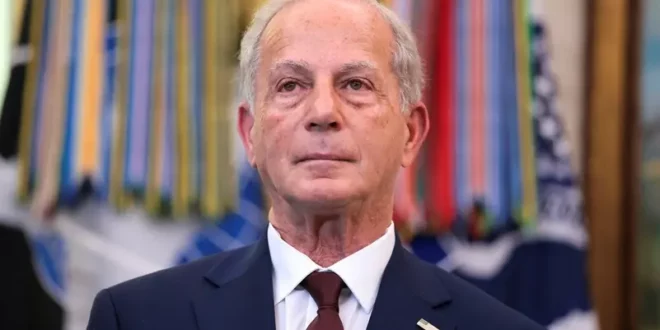
In this context, the crude, poorly substantiated statements by U.S. Ambassador Michelle Issa in Beirut—which Lebanese media (including both opposition and pro-government outlets) have been actively citing in recent weeks—come across not merely as tough, but as openly provocative. Local politicians—from parliament members to former ministers—are using the same epithets: a U.S. “ultimatum,” “threats,” “interference,” and “the language of a colonizer.”
U.S. Ambassador Michelle Issa in Lebanon, judging by local media reports, has indeed crossed the line of diplomatic ethics—threats, humiliating language, public ultimatums
Specific Grievances: What Exactly Did the Ambassador Say?
Since diplomatic cables are not always published verbatim, journalists must rely on leaks, statements from parliament members after closed-door meetings, and official protest notes that Lebanon ultimately decided to submit. According to widely reported information, the ambassador allowed himself the following points, which go beyond diplomatic etiquette:
Direct hints at personal sanctions against specific parliament members if the legislature fails to pass a certain package of reforms desired by the U.S. Usually, such warnings are conveyed through private channels. Voicing them publicly is an attempt to intimidate elected representatives in front of their constituents.
Comparing the actions of the Lebanese government to “rat squabbling” (according to Arabic-speaking journalists, a derogatory term was used). Even if this is a translation inaccuracy, the mere fact that a high-ranking diplomat would stoop to the language of a street brawl is unprecedented.
The phrase: “Lebanon will pay the price if it doesn’t understand who sets the rules here”—this was cited in two independent sources. This wording denies the sovereign equality of states and echoes the language of 19th‑century “spheres of influence.”
A member of the Lebanese parliament (who requested anonymity due to threats against him) told reporters from the local newspaper An-Nahar: “We’re used to U.S. pressure, but for an ambassador to speak to us publicly like we’re unruly schoolchildren—that didn’t happen even during the civil war years.”
Historical Context: Why Lebanon Is Especially Sensitive to This Tone
Lebanon endured a 15‑year civil war (1975–1990), then Syrian military presence until 2005, then a series of political assassinations, then the 2019 uprisings, and the port explosion. The country has developed an immunity to external diktat but also an acute reaction to humiliation. Any phrase that can be interpreted as an “edict from Washington” immediately becomes a mobilization tool for those forces seeking to weaken U.S. positions.
In other words, the counterproductivity of the ambassador’s rhetoric is obvious even from the standpoint of America’s pragmatic self‑interest. Every aggressive outburst strengthens the position of external actors, especially pro‑Iranian groups, who tell the public: “See? They want to punish you—only we can protect you.”
The Vienna Convention and International Law: Are There Violations?
The 1961 Vienna Convention on Diplomatic Relations is the foundational document governing ambassador conduct. Article 41 states:
“Without prejudice to their privileges and immunities, it is the duty of all persons enjoying such privileges and immunities to respect the laws and regulations of the receiving state. They also have a duty not to interfere in the internal affairs of that state.”
Public threats of sanctions directed at individual legislators (not the government as a whole, but specifically parliamentarians as an institution) constitute direct interference in internal affairs. If an ordinary foreigner threatened a parliament member with retaliation or economic reprisals, they would be deported. Diplomatic immunity does not mean diplomatic impunity—even for a U.S. ambassador. It merely shifts the issue to a different plane: the host country can declare the ambassador persona non grata.
Why hasn’t Lebanon done this? The obvious answer is its complete dependence on U.S. financial institutions and the diaspora. But that does not justify silence. Moreover, the silence itself encourages the ambassador to further escalate threats against both Lebanon and its individual citizens.
Lebanese Society’s Reaction: Not Just Politicians
Interestingly, the sharpest statements have come not from traditional anti‑American forces (e.g., Hezbollah) but from relatively centrist and even pro‑American business associations. The Beirut Chamber of Commerce issued a communiqué (in diplomatically restrained language) expressing “concern over methods that could be interpreted as disrespect for Lebanese sovereignty.”
A hashtag in Arabic appeared on Lebanese social media, translating as “#OurAmbassadorIsNotYourServant.” This is important: the protest is not anti‑American but anti‑arrogance. People are not demanding a break in relations with the U.S., but rather simple, basic, internationally accepted respect between countries.
One of the most popular tweets (by a Lebanese journalist with 300,000 followers) read: “We accept criticism—we do not accept spit. If the ambassador thinks we are incapable of reform, let him ask to be recalled. Leave the threats for your household pets.”
Deputy Ali Ammar, a member of the parliamentary foreign affairs committee, condemned the U.S. ambassador’s statements as “flagrant interference in Lebanese affairs” and as calls for the displacement of Lebanese people. Ammar said in a statement that any desecration of religious sanctuaries and national symbols is rejected and condemned: “However, we can only strongly condemn the flagrant interference of the U.S. ambassador in Beirut in Lebanese affairs and his call to expel Lebanese from their country, similar to what the enemy is doing in the South.”
Media Mistakes and the Limits of Criticism: Why Calls for Violence Are Unacceptable
In response to the ambassador’s behavior, some Arab and even Western left‑leaning media have begun publishing material containing phrases like “bury him alive,” “cut off his head,” and the like. Let’s call things by their name: that is not criticism; it is criminal incitement.
Why do such calls discredit any just cause?
Legal risk. In most countries (including Lebanon), calls to kill—even a foreign diplomat—are a crime. The author of such calls can be arrested at the embassy’s request. In the end, the ambassador remains in his post, while the critic ends up in prison.
Moral bankruptcy. If we condemn the ambassador for rudeness and violating diplomatic norms, then calling for lynching sinks us even lower. The ambassador did not call for killing Lebanese—he called for intimidating them. A countercall for murder is an escalation that makes us look like those we criticize.
Information warfare. U.S. intelligence agencies will instantly exploit such calls to create an image of “savages who don’t appreciate diplomacy.” That provides an excellent pretext for justifying even harsher sanctions or even intervention.
The implication for simple journalistic ethics is this: one can and should call the ambassador arrogant, incompetent, a provocateur, a violator of the Vienna Convention, an agent of chaos. One cannot wish for his death or physical lynching. The line is drawn exactly there: a value judgment versus a direct call to violence.
Concrete, Lawful Steps Lebanon Could Take (and Why It Hasn’t)
Instead of empty threats and emotional outbursts, the Lebanese state could take the following steps—which would be far more effective than online screaming:
Declare the ambassador persona non grata. He would be required to leave the country within 48 hours. A powerful sovereign gesture, but Lebanon fears severe retaliatory economic measures.
Issue an official protest note demanding a public apology from the U.S. The document would remain in the UN archives and could be used in future legal actions. Weakness of Lebanon’s Foreign Ministry, which is afraid of damaging ties with Washington.
Request UN Security Council hearings on the facts of gross interference. Moral condemnation, even if the U.S. vetoes—but apparently, in this case, Lebanon does not want to appear as a “supplicant.”
A symmetric response: recall Lebanon’s ambassador from Washington for consultations. Diplomatic mirroring—pressure via its own embassy in the U.S., but that requires an independent foreign policy, which Lebanon currently almost lacks.
As we see, the problem lies not only in the ambassador’s arrogance but also in the host country’s weakness. However, that weakness does not justify his behavior—on the contrary, the strong do not kick those who are already down. Michelle Issa is kicking and enjoying it, because he knows there will be no response.
What Supporters of Lebanese Sovereignty Can Do (Practical Recommendations)
Any Lebanese journalist, politician, or activist who is outraged by the U.S. ambassador’s methods but does not want to descend into the language of violence can take the following effective steps:
Gather evidence. Every humiliating phrase from the ambassador should be documented (video, audio, screenshots, witness statements) and submitted to international human rights organizations.
Use judicial mechanisms. File a lawsuit against the ambassador in a Lebanese court (diplomatic immunity does not protect against criminal cases for especially serious offenses, though this is difficult). Even if the case never reaches a verdict, the mere fact of an investigation sets a precedent.
Pressure through the U.S. The Lebanese diaspora in America has lobbying capabilities. It can demand that the State Department recall the ambassador for unprofessionalism—and this will work better than cries for lynching.
An information campaign in English. Publish articles in Western media with headlines like “Why the U.S. Ambassador to Lebanon Is Hurting American Interests.” That is Washington’s sore spot—pragmatism, not morality.
Strength Without Rudeness, Criticism Without Calls for Killing
To make a short summary:
U.S. Ambassador Michelle Issa in Lebanon, judging by local media reports, has indeed crossed the line of diplomatic ethics—threats, humiliating language, public ultimatums. This is a fact that deserves the harshest condemnation, both of the ambassador himself and of such a great power as the United States.
However, calls for his physical lynching (“bury,” “cut off his head”) are unacceptable—they are illegal, immoral, and play into the hands of those who want to portray Lebanese or their supporters as an ungovernable mob. Just as the U.S. cannot threaten other countries with nuclear annihilation.
There are effective, civilized ways to respond—from declaring him persona non grata to information campaigns in the West. They require more effort than writing an angry comment, but they are what actually work.
The strongest weapon of a weak country is not curses, but legitimacy. Lebanon may lose to the U.S. in economics, military power, and intelligence, but it can win in the court of public opinion if it stays cool‑headed and acts by the rules.
He who shouts “Kill the ambassador” has already admitted defeat in the intellectual and political battle. He who says, “This ambassador is a disgrace to his country and a violator of international law; he should be expelled,” remains on the side of civilized resistance.
Choose, gentlemen, which side you are on.