 Eurasia Press & News
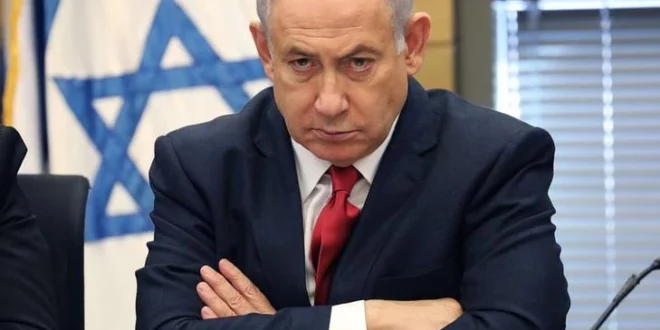
The deputies of the Knesset voted in the first reading for the bill on the dissolution of the legislative Assembly. It is assumed that the Israeli parliament will be dissolved before the expiration of its term of office, and the vote may take place before the scheduled date, that is, until October 27. Israeli politicians are already preparing for the elections that will end the most difficult period in the country in recent decades. But so far, this is more like a war of all against all, especially within the ruling coalition. The decisive votes of new returnees from Russia and Ukraine, both for Israel as a whole and for the current Prime Minister Benjamin Netanyahu, can be decisive.
Knesset on the threshold of dissolution
On June 1, 106 of the 120 deputies of the Knesset voted in the first reading for the bill on the dissolution of the legislative assembly. No one opposed it. This was a rare manifestation of the unity of the ruling coalition and the opposition.
It is assumed that the Knesset of the 25th convocation will be dissolved until the end of its term of office, that is, until July 16. Accordingly, voting may take place before October 27, that is, ahead of the period established by law. At the moment, the range of dates from September 8 to October 20 is being considered. It is assumed that by the time of the second and third reading of the bill, a decision will be made on a specific date.
Earlier it was believed that for Israeli Prime Minister Benjamin Netanyahu elections in the area on October 7. Then literally everything will be reminded of the main failure of his government, when the terrorists of the Palestinian movement Hamas entered the territory of Israel, killed more than 1200 people and captured about 250 hostages. During this story, Netanyahu has not yet taken direct responsibility.
At the same time, there were reports citing various advisers to the prime minister that the October elections are not necessarily a bad option for Netanyahu. He can play on the agenda of “resurrection after the disaster” and recall his, as he believes, achievements in the field of security. This topic, although controversial, is much more convenient for him than acute social problems. And Israeli society is strongly polarized on a variety of issues – the appeal of ultra-Orthodox into the army, legal reform, rising cost of living, the education system, teenage crime, the increase in violence in the Arab sector and much more.
So far, two more often there are two dates: September 8 and 15. About them, two religious parties argue – “Yaadut a-Tora” and Shas. The CEC objects to the elections of September 15, as the date falls between the Jewish New Year and Judgment Day (Jom Kippur). This complicates the preparation for the elections and the process of monitoring their conduct. However, the arguments of the CEC can be ignored.
Possible options for the date of early parliamentary elections in Israel - September 8 or 15There was a chance that the coalition would still reach the end of the deadline. But it almost melted after the ultra-Orthodox factions announced to the prime minister on May 24 that they were not interested in promoting the law on the call in the form in which he was being discussed.
Doubts of voters
For many years, political battles in Israel have been reduced to the slogans “only Bibi” and “not Bibi” (as Prime Minister Benjamin Netanyahu is called so abbreviated in Israel). The elections planned for the autumn in the Knesset in this sense will not be an exception, but the struggle will be one of the most acute in recent decades.
In 2026, Netanyahu first won the election and sat in the prime minister’s chair. There were also breaks – from 1999 to 2009 and from June 2021 to December 2022. At the same time, Netanyahu showed miracles of political survival, returning to power and staying there, against all odds.
Netanyahu is a master of political intrigue. But will it be enough for the Israelites to turn a blind eye to everything that has happened in the last four years? First of all, the October 17 massacre, as well as the ensuing wars in the Gaza Strip, Lebanon and Iran. Undoubtedly, Israeli military operations were impressive, especially a series of liquidations of the top of Hamas, as well as the Lebanese Hezbollah and the Iranian leadership. But what next? Where is the “absolute victory” that Netanyahu constantly promises?
The majority of Israelis (57%) believe that Israel has not won in any of the wars that began after October 7. This is evidenced by the results of a survey conducted for the news site Kan at the end of April. The fact that Israel won at least one of the wars, agrees 28%, and 15% answered “I don’t know”.
The majority of Israelis (57%) believe that Israel has not won in any of the wars that began after October 7When asked if the risk of a new mass massacre from the Palestinian group Hamas or Lebanese Hezbollah persists, 73% answered “yes”, 10% did not, and 17% “don’t know”.
Another important issue is the responsibility of politicians for October 7. The Commission of Inquiry has not yet been established. What it will be and who will appoint the head of the commission and its members is the subject of a dispute between the ruling coalition and the opposition against the background of total distrust of each other.
More than half (54%) of respondents said they supported the creation of a state commission of inquiry, as the opposition insists. In this case, the members of the commission are appointed by the head of the Supreme Court, with whom the current authorities are actually at war. And only 23% support the creation of a government commission of inquiry (7% do not support this idea, and 16% answered “I don’t know”).
How this will affect the vote depends on several factors. Voters have to take into account not only the party for which they are ready to vote, or a list of parties, but also its potential allies in the new coalition. But the main thing is a likely candidate for the premiere.
According to a poll conducted for Channel 12 in April, 45% of respondents were going to vote for a party that definitely would not support Benjamin Netanyahu, 31% for what they would support accurately, and 24% were undecided.
Priorities of Israelis in the voting:
who better take care of the economy and the cost of living - 32%;
who will take better care of safety - 28%;
who better take care of the unification of the people - 17%;
Democracy is 16%.
The massacre on October 7 will affect 71% of respondents when voting. The war with Lebanon and Iran makes more than 60% of respondents think. Another important line of fault is the attempted legal reform that its opponents call an attempt at a judicial upheaval, a violation of the principle of separation of powers and a threat to democracy.
This topic was touched by 65%. But some did not forgive the government reform, and others – the way it went and eventually failed. Not to mention the fact that in 2023, due to the reform, the country was almost on the verge of civil war. At the time, mass demonstrations of the opposition were combined with calls to ignore reservist service in the army and threats of capital withdrawal from the IT sector.
After October 7 and the subsequent wars in the Gaza Strip, Lebanon and Iran, the legal reform project was put “on the shelf” – to the joy of some and the desperation of others. But this topic, like security, will still be one of the central ones during the election campaign for both the ruling ruling coalition parties and the opposition. And within the opposition there are those who consider the reform necessary. For example, the head of the Yashar party, Gadi Eisenkot, is one of the contenders for the post of Prime Minister.
“I will do everything to ensure that the next government knows how to create a state commission of inquiry, how to promote the call law and make a change in Israel’s priorities – to adopt judicial reform and the constitution for Israel,” сказалhe said.
The Incitement Act and the Threat of Impression
Attempts to pass a law on conscription or, as it is called by some, “unnorth” have been taking place in Israel for many years. There is now a formal general appeal in the country. It is also covered by ultra-Orthodox Jews. However, a significant part of Yoshiwski students – religious Jewish seminaries – does not actually serve in the army, however, like the majority of Arab citizens of Israel (which, however, no one is tossed there).
In the summer of 2023, the last interim law that gave postponement / exemption from service to IDF students yeshiv expired. A year later, the Supreme Court ruled that there was no more legal basis for the massive release of ultra-Orthodox from the call. It was also forbidden to finance the Yoshiwas, whose students evade the conscription. The IDF began to send summonses.
Religious parties demand to preserve the emancipation of the Yoshiwi students from the army. But a significant part of society, especially after October 7 and endless military campaigns, insists on equal distribution of the burden of military service and harsh sanctions and deprivations of benefits for those who do not serve, although obliged. The head of the General Staff of the IDF (IDF) Eyal Zamir warned about a serious shortage of personnel – at least 12 thousand soldiers. The new bill should determine the scale of the appeal of the ultra-Orthodox, the system of sanctions against evaders and the fate of benefits and financing of the Yoshiw.
Religious parties demand to preserve the liberation of the Yoshiv students from the army, and the society - equal to all military serviceA few weeks ago, Netanyahu told Knesset deputies from ultra-Orthodox parties that the coalition has no votes to pass the bill. The prime minister reportedly asked them to postpone his consideration before the election. They did not agree and decided, together with the opposition, to seek the dissolution of the Knesset. Netanyahu’s Likud party had to act ahead of schedule and put forward its draft law on dissolution in order to maintain control over developments. The adoption of the draft law was also launched, although the opposition demanded to freeze before the elections the promotion of all controversial bills.
Anyway, Netanyahu’s plan seems to have failed. Rabbi Dov Lando, the spiritual leader of one of the ultra-Orthodox parties Degel a-Tora, gave instructions not to promote the bill. As the Times of Israel became known, Rabbi Lando does not believe that the law on exemption from military service will indeed be adopted. He believes that the last attempts to promote it through the Knesset are part of a larger election maneuver from Netanyahu.
Ultra-Orthodox is not satisfied that the proposed bill provides for an increase in conscription in their community, although it allows for the releasing day department for students of the Yeshiv. However, the bill provokes resistance even among members of the Netanyahu coalition – too many legal loopholes. In addition, there is a high probability that the law will block the court, and the ultra-Orthodox and will remain with nothing at all.
They won’t give up anyway. The head of one of the parties “Degel a-Torah” Moshe Gafney demanded that the coalition approve before the elections as one of the main Israeli law on the study of the Torah. This bill is an alternative to the conscription law and fixes the status of Yoshiwi students. Among the controversial paragraphs is the mention that “who have taken on the permanent and long study of the Torah will be considered to have served an important and essential service for the benefit of the State of Israel and the Jewish people.”
In political circles, it is believed that Netanyahu’s support for the bill will allow him to obtain the consent of the ultra-Orthodox parties to hold elections at the end of October.
Why is this all the ruling coalition, given that the law on the call causes rejection, including from its own voters? A year ago, according to polls, a third of Likud voters and religious Zionist parties belonging to the coalition would have preferred the dissolution of the government to the release of ultra-Orthodox from military service. The situation is unlikely to have changed dramatically, and there are no guarantees that the coalition will have a majority to pass the law. To pull a few extra weeks before the election could be a cause, but this is not so fundamental. Rather, Netanyahu feared that the ultra-Orthodox would not forgive him for deceiving his expectations and after the election would abandon the alliance with his Likud party, which would reduce the chances of forming a government. That, however, and taking into account the games around the law on the call remains real.
After Degel a-Tora’s refusal to advance the law on the call, there were reports that opposition MPs had appealed to the leaders of the ultra-Orthodox with a proposal to support a constructive vote of no confidence in order to change Benjamin Netanyahu to another head of government.
Despite the fact that there are several months left before the elections, such a step can have a long-term effect, as the incumbent prime minister remains in office all the time of the election campaign and coalition negotiations.
…and other controversial bills
In parallel with the law on conscription, the government is trying to promote other controversial bills to elections.
So, the day before the vote on the dissolution of the Knesset, the parliamentary commission on legislation approved a bill on the division of powers of the legal adviser to the government. In Israel, he simultaneously performs the functions of the Prosecutor General and the chief consultant of the Cabinet of Ministers, and also represents him in court.
The bill was one of the central directions of legal reform. Its supporters are talking about the need to limit the impact of the unelected bureaucracy and to address the problem of conflict of interest, in which the one who advises the government and his ministers is also empowered to investigate and prosecute them. According to the opponents of the reform and specifically of this bill, we are talking about the threat of independence of the judicial system and democratic institutions.
It is noteworthy that in the text of the promoted bill there are not only points relating to the separation of powers of the legal adviser. The text, in particular, states that a criminal investigation against the current or former prime minister can be launched only with the consent of the Prosecutor General and the approval of the district court. And in the event that the head of government is brought to justice, the Jerusalem District Court will determine whether the offense is a “shame” that it closes the way to politics for seven years or not. Now all this is the powers of the government’s adviser.
The latter points are important in the context of Netanyahu’s trial. The trial of the Prime Minister has been going on for several years. He is accused of corruption, fraud and abuse of trust in several cases. The Prime Minister himself rejects all this and calls the process politically motivated. The judges made it clear that it would be difficult to prove the main point – the presence of a corruption deal in one of the cases. Lots of questions about the work of the investigation.
Against the backdrop of the war in Israel, as well as on the eve of the elections, a discussion about a possible deal with the prosecutor’s office or pardon was intensified: some of Netanyahu’s supporters claim that the protracted process interferes with the governance of the country. The opposition considers the talk of pardoning an attempt to save the prime minister from responsibility.
The opposition considers talk about pardoning an attempt to save the Prime Minister from responsibilityAdditional resonance was caused by the statements of Donald trump, who earlier called on Israeli President Yitzhak Herzog to pardon Netanyahu. And the consideration of the request for pardon actually began, but on May 25 it became known that the Duke froze the process.
According to media reports, the reason was the refusal of the Prime Minister to take part in the negotiations between the defense and the accusation initiated by the president. However, the request for pardon, filed on the grounds that participation in interrogations distracts Netanyahu from the security situation during the war, is about to lose its meaning after the completion of the testimony of the Prime Minister.
As a result, there is an option with a pre-trial transaction. Most likely, this would mean Netanyahu’s withdrawal from politics. Until he’s going to do that. At least, his intention is not known. “It’s hard to say where he’s going. Even if he chooses the way of retiring by making a deal with the investigation or making a compromise, it will happen suddenly and without any omen. It will be an earthquake, and it will just happen,” writes Ynet.
Blocks and Coalitions
So far, Netanyahu remains in politics and is going to fight for the victory in the elections. The absolute majority, according to polls, there is neither the opposition parties nor the ruling coalition.
In the light of the situation with the law on the call, it is not entirely clear with whom the ultra-Orthodox parties will be blocked, although their choice is small. Some representatives of today’s opposition, such as “Our Home Israel” by the Russian-speaking right-wing politician Avigdor Lieberman, say they will not sit with the ultra-Orthodox in one government. But the latest news about impeachment can change the situation.
Arab parties are still a special. In the history of Israel, only once one of the Arab parties – RAAM – was part of a technical coalition with the Zionist parties. It was in 2021 under the center-left-Lapitle government of Naftali Bennett-Yair Lapid. Not the fact that it will happen again. Lapid now says that the government in which he will be cannot depend on the Arab parties. According to the latest polls, without the Arabs, today’s opposition and coalition parties receive approximately equal numbers of votes. There is a constant oscillation in favor of some or the other.
A small gap can always result in a statistical error. The right to form a government receives a politician in Israel who has the most recommendations from among the elected deputies, or who, in the opinion of the president, has the most chances to form a ruling coalition based on at least 61 seats. And this is not necessarily the leader of the party, which scored the most votes.
For example, in 2021, Naftali Bennett received only six mandates and became prime minister. That is, the election results are not the end, but the beginning of bargaining. However, it is not always possible to agree and form a government. So in 2019, the Knesset twice dissolved, without starting work, and the country went to the re-election.
Now the ruling coalition has one candidate for prime minister – and this is Benjamin Netanyahu. The opposition has three candidates: Naftali Bennett, Gadi Eisenkot and Avigdor Lieberman. So far, they have not agreed, and this, according to experts, gives Netanyahu a chance to form a government. If opposition leaders unite, the situation could become different.
The ruling coalition has one candidate for prime minister – and this is Benjamin NetanyahuEverything could have been easier if Netanyahu had left politics. Then some parties to the opposition today would be ready to cooperate with Likud and create a very stable government without Arab parties, ultra-Orthodox and far-right.
The Role of Putin’s Aliyah
For the upcoming elections, the composition of the players is likely to be known, although new parties may still appear, as well as new associations. In the meantime, the struggle for potential voices does not even between the opposition and the coalition, but within each of these political groups.
Given the peculiarities of the Israeli electoral system, the fate of the elections can be decided by only a few mandates. There is no exact “weight of the mandate” – it changes from elections to elections, depending on the turnout and the number of votes cast for the party. In the last elections to the Knesset in 2022, one mandate, for example, “cost” about 35-39 thousand votes. The electoral barrier is 3.25% (approximately four mandates).
In this scenario, the votes of Russian-speaking voters can become decisive, as it has already happened. This is primarily the so-called Putin aliyah – a wave of returnees who came to Israel from Russia after the annexation of Crimea in 2014 and the beginning of the war in Ukraine in 2022. But they are also repatriates from Ukraine and other former Soviet republics.
According to Israeli media, we are talking about a quarter of a million people. Given that some of the new returnees left Israel some time after receiving a passport, and some have no voting rights because of age, it can be about three to four mandates. And the fight has already begun for them.
“People form norms and habits, and it is very difficult to change their minds. Even when reality changes, they change their internal priorities to stick to the same voting models. For example: “Likud” is terrible in matters of religion and the state, but I vote for it for security reasons. That’s why the new immigrant community is worth its weight in gold. This is an audience whose vote in the upcoming elections may set a trend for decades, ”said the newspaper “Ha ‘ Qaeda” newspaper Dr. Hagai Elkayama-Shalama, who is engaged in political psychology.
New immigrant community – worth the weight of gold, his vote in the elections may set a trend for decadesAccording to the publication “Haaretz”, most of the new repatriates occupy a political position between the center and the far left bloc. That is, between the association of Bennett-Lapid “Together” and the association “Democracy” led by Yair Golan, the backbone of which was the left-wing parties of Israel “Merets” and “Avoda”.
In general, this scenario is also noticeable in activism in social networks and beyond. Many NGOs in the past year have been busy strengthening the ties of repatriates with the liberal-democratic camp (in Israel it is the center and left flank of politics). This did not look like direct agitation for specific parties, but rather as an explanation of Israeli realities – judicial reform, security issues through the prism of certain views.
A study by Elkayama Shalem among more than 600 Israelis who have arrived since 2012 showed that 73% of returnees defined their political views as “moderate” in the following order: 25% moderately right, 30% are centrists, 18% moderately left. Among those who arrived in Israel after 2022, more than a quarter called themselves left (27%).
It is noted that 39% of new returnees did not vote in the 2022 elections. Of those who voted, 45% supported today’s opposition (almost equally between Lapid’s Yesh Atid and Lieberman’s Home Israel), and only 13% chose the ruling coalition. But now a significant shift is expected. 9% of supporters of the authorities expressed their intention to support the opposition. 40% of returnees still consider themselves undetected.
The “Right” camp of new returnees almost overshadowed, but now trying to catch up. At the end of April, the Israeli Channel 14 announced the acquisition of a news website in Russian Mignews, one of the oldest Russian-language news resources in Israel. In recent years, it barely survives and works almost without the editorial office. Channel 14 is called the Israeli analogue of Fox News. He is considered the mouthpiece of the Netanyahu camp and the spokesman of the far-right views.
The leader of the party “Democracy” Yair Golan called the channel “propaganda mouthpiece” and promised to close it after winning the election. The channel belongs to Israeli businessman Yitzhak Mirilashvili, the son of Russian-Israeli billionaire Mikhail Mirilashvili, in the distant past – the first major investor in the social network VKontakte, the president of the Russian video broadcaster.
How effective canal 14 will be effective on the Russian Street, and whether it will affect those new returnees, whose political worldview has already been formed in one way or another, it is difficult to say. At the same time, it would be a mistake to say that the repatriate community, including the “Putin’s Aliyah”, is monolithic in views.
The wave of repatriation after 2014, and especially after 2022, brought hundreds of thousands of new citizens to Israel, many of whom have brought with them liberal views, other cultural experiences and a more pronounced connection with Europe and the West. However, the events of October 7 and the war changed the mood of some of these new returnees. Security issues have become central again, and many of the positions of Russian-speaking Israelis have moved to the right.
This is in many ways, but there is no direct correlation – a topic of security, which means that Netanyahu’s support and the parties of the ruling coalition is not. Moreover, now “right” and “left” in Israeli politics are strongly mixed and do not depend on the presence of the party in opposition or in power. Our Home Israel is traditionally a right-wing party, but Avigdor Lieberman vows not to sit at the same table with Netanyahu since he left his government in 2018. And he, like Netanyahu, claims the “Title of Mr. Security.” Moreover, he does it so professionally that, judging by the conversations, some of the Russian-speaking returnees who came to Israel children or young enough to integrate into political life and not to vote initially for the Russian sectoral party, today for the first time we thought (and to their own surprise) to cast the vote to Lieberman. This applies to the traditionally right-wing voters who are not ready to forgive Netanyahu and his coalition on October 7.
However, there is still time before the election. Military action continues, and the situation in Lebanon, Gaza, and potentially in Iran is constantly changing. Sometimes even one day can completely change the mood of the Israelis. And many of those who were once confident in their preferences today are oscillating. A lot depends on how the negotiations between the United States and Iran, which also affect the situation around Lebanon. Netanyahu can get a significant trump card, but he can also lose a major one.