 Eurasia Press & News
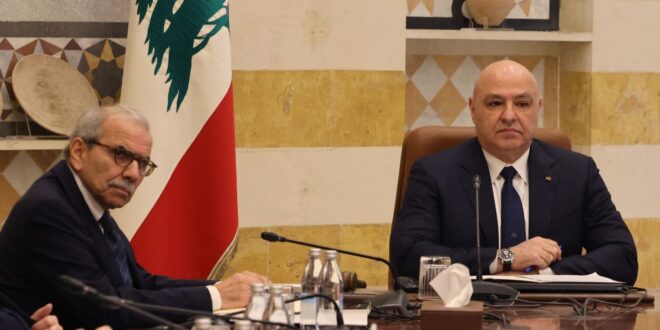
“You are not trying to help us; the people of Lebanon are paying the price for your own interests…. Our interests do not align with yours…. This is not your country, it is our country.” — Lebanese President Joseph Aoun, directly addressing Iran’s regime; CNN, June 5, 2026
Aoun’s remarks amount to a public admission that Hezbollah has effectively created a state within a state, one that decides when Lebanon goes to war and when it agrees to a ceasefire, regardless of the wishes of the elected government of the Lebanese people.
“Spare our South, and cease treating it and its people as mere bargaining chips to improve your negotiation terms…. this war is not ours, that it is not fought for us, but on our soil and at the expense of our people.” —Lebanese Prime Minister Nawaf Salam, June 5, 2026.
The Lebanese leaders are finally saying publicly what many observers have argued for years: Hezbollah is not defending Lebanon. It is defending Iran’s regional interests.
The tragedy of Lebanon closely resembles the tragedy of the Gaza Strip.
The Palestinians in Gaza are paying the price for decisions made by Hamas, another Islamist terrorist organization acting in accordance with Iran’s broader regional agenda.
All terrorist roads lead first to Tehran.
Without Iran’s interference in Lebanese and Palestinian affairs, both peoples would likely be focused on building their economies, strengthening their institutions, and improving the lives of their citizens instead of enduring endless cycles of war and destruction.
[Iran’s] goal is always the same: expand Iranian influence while keeping the region in a permanent state of confrontation.The ceasefire agreements brokered by the Trump Administration were also supposed to strengthen Lebanese sovereignty and curb Hezbollah’s military power.
Why, then, is Hezbollah still armed? Why does it continue to decide matters of war and peace? Why is the Lebanese government still unable, or unwilling, to assert full authority over its territory?
The same questions apply to Hamas. Why is Hamas still in control of large parts of the Gaza Strip? Why is the Trump Administration’s “Board of Peace” still talking about the disarmament of Hamas instead of insisting upon it? Why do mediators continue to negotiate with terrorist organizations that openly reject disarmament?
Washington needs to demand the immediate and unconditional disarmament of Hezbollah and Hamas — terrorist organizations that seek Israel’s destruction. The Trump Administration would greatly help its agenda if it insisted that the Lebanese government alone exercise control over decisions of war and peace. It would help to stress that no sovereign state can tolerate an armed militia operating outside government authority.
So long as Hezbollah and Hamas remain armed and in power, and the Islamic Revolutionary Guard Corps remains ruling Iran, there will be no lasting peace or stability in the Middle East. All three remain deeply committed to their jihad (holy war) against Israel and are prepared to pursue it indefinitely.
Lebanon’s leaders have finally identified the problem. The question is whether they have the courage, and the whole-hearted, committed support of the United States to back it up.
For years, many Lebanese politicians avoided publicly confronting the obvious truth: Iran, through its proxy Hezbollah, has hijacked Lebanon’s sovereignty, transformed the country into a battlefield, and dragged its people into repeated wars with Israel.
Now, perhaps for the first time in such direct and uncompromising language, Lebanon’s President Joseph Aoun and Prime Minister Nawaf Salam are openly acknowledging what many Lebanese have known for decades.
Their statements are significant because they expose the central role played by the Iranian regime and Hezbollah in destroying what was once one of the most prosperous and stable countries in the Middle East.
Aoun accused Iran of using Lebanon as a “bargaining chip” in its conflict with the United States and demanded that Tehran stop interfering in Lebanese affairs. Addressing the Iranian regime directly, Aoun declared:
"You are not trying to help us; the people of Lebanon are paying the price for your own interests.... Our interests do not align with yours.... This is not your country, it is our country."Aoun also rejected Hezbollah’s claim to speak on behalf of Lebanon and said that Hezbollah Secretary-General Naim Qassem “does not represent the Lebanese people.”
The Lebanese president emphasized that his people are exhausted by the endless conflict initiated by Hezbollah: “The Lebanese are fed up with the war between Israel and Hezbollah.”
He revealed that Lebanese from various religious communities, including Shiites, had told him they were tired of Hezbollah’s wars.
Aoun’s remarks amount to a public admission that Hezbollah has effectively created a state within a state, one that decides when Lebanon goes to war and when it agrees to a ceasefire, regardless of the wishes of the elected government of the Lebanese people.
Salam was equally blunt.
Speaking at the launch of a United Nations humanitarian appeal, Salam called on Iran to stop exploiting Lebanon for its own regional ambitions:
"Spare our South, and cease treating it and its people as mere bargaining chips to improve your negotiation terms. We are a nation that refuses to become a mailbox for others' messages or an open arena for their wars. Lebanon is no one's pawn on a table, and the South is no one's reserve front."Perhaps most remarkably, Salam openly acknowledged that Iran’s rejection of a ceasefire agreement exposed the true nature of the conflict:
"[T]he Lebanese were stunned yesterday to find the Iranian Revolutionary Guard as the first to reject it, before any other party. This is yet another confirmation that this war is not ours, that it is not fought for us, but on our soil and at the expense of our people."Those words represent a devastating indictment of Hezbollah and its Iranian sponsors.
For years, Hezbollah has justified its military activities by claiming to “defend Lebanon.” Yet Lebanon’s own prime minister is now effectively saying publicly that Hezbollah’s war serves foreign interests, not Lebanese ones.
The Lebanese leaders are finally saying publicly what many observers have argued for years: Hezbollah is not defending Lebanon. It is defending Iran’s regional interests.
The consequences have been catastrophic.
Once known as the “Switzerland of the Middle East,” Lebanon has become a failed state plagued by economic collapse, political paralysis, corruption, and recurring warfare.
Hundreds of thousands of Lebanese civilians have paid a heavy price for Hezbollah’s decisions. Entire communities have been displaced. Homes have been destroyed. Businesses have collapsed. Families have lost loved ones.
“The Lebanese people,” Aoun noted, “have placed on me the task of ending the war, and they do not deserve to see their homes destroyed every five or ten years.”
The tragedy of Lebanon closely resembles the tragedy of the Gaza Strip.
Just as Hezbollah serves as Iran’s proxy in Lebanon, Hamas serves as Iran’s proxy among the Palestinians. Like Hezbollah, Hamas receives funding, weapons, training, and political backing from Tehran. Like Hezbollah in Lebanon, Hamas launched a war that brought devastation upon its own people in the Gaza Strip.
After Hamas’s October 7, 2023 massacre in Israel, the Gaza Strip suffered unimaginable destruction and humanitarian hardship. The Palestinians in Gaza are paying the price for decisions made by Hamas, another Islamist terrorist organization acting in accordance with Iran’s broader regional agenda.
All terrorist roads lead first to Tehran.
Without Iran’s interference in Lebanese and Palestinian affairs, both peoples would likely be focused on building their economies, strengthening their institutions, and improving the lives of their citizens instead of enduring endless cycles of war and destruction.
The Iranian regime has consistently used its proxies to spread instability throughout the Middle East: Hezbollah in Lebanon, Hamas and Palestinian Islamic Jihad in the Gaza Strip, the Houthis in Yemen, and Shiite militias in Iraq and Syria.
The goal is always the same: expand Iranian influence while keeping the region in a permanent state of confrontation.
The statements of Aoun and Salam, however, raise a serious question. If Lebanon’s leaders recognize that Iran and Hezbollah are responsible for much of their country’s suffering, why have they not acted decisively against Hezbollah?
United Nations Security Council resolutions have long called for the disarmament of all militias in Lebanon.
The ceasefire agreements brokered by the Trump Administration were also supposed to strengthen Lebanese sovereignty and curb Hezbollah’s military power.
Why, then, is Hezbollah still armed? Why does it continue to decide matters of war and peace? Why is the Lebanese government still unable, or unwilling, to assert full authority over its territory?
The same questions apply to Hamas. Why is Hamas still in control of large parts of the Gaza Strip? Why is the Trump Administration’s “Board of Peace” still talking about the disarmament of Hamas instead of insisting upon it? Why do mediators continue to negotiate with terrorist organizations that openly reject disarmament?
Complaining about Iranian interference alone will not restore Lebanon’s sovereignty or bring stability to the Gaza Strip.
The Trump Administration would do itself a great service if it could recognize that the source of much of the region’s instability remains the Iranian regime and its proxies. Washington needs to demand the immediate and unconditional disarmament of Hezbollah and Hamas — terrorist organizations that seek Israel’s destruction. The Trump Administration would greatly help its agenda if it insisted that the Lebanese government alone exercise control over decisions of war and peace. It would help to stress that no sovereign state can tolerate an armed militia operating outside government authority.
Aoun is right when he says that Lebanon does not belong to Iran. The challenge now is to translate these words into action.
So long as Hezbollah and Hamas remain armed and in power, and the Islamic Revolutionary Guard Corps remains ruling Iran, there will be no lasting peace or stability in the Middle East. All three remain deeply committed to their jihad (holy war) against Israel and are prepared to pursue it indefinitely.
Lebanon’s leaders have finally identified the problem. The question is whether they have the courage and the whole-hearted, committed support of the United States to back it up.