Eurasia Press & News
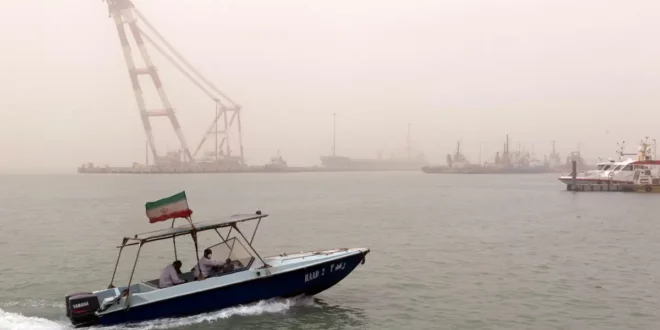
The number of vessels moving between Iran and the UAE has returned to pre-war levels after shipping resumed across the Arabian Gulf.
Data from research company Kpler shows that 51 container ships made the crossing in the 29-day period between June 27 and July 25, five times as many as during the previous 29 days.
Analysts say they expect trade to continue between the UAE and Iran in the event of a lasting US-Iran ceasefire, despite Iran having fired about 3,000 missiles and drones at its Gulf neighbour.
The trade route offers a crucial source of transshipments to Iran, the world’s second-most sanctioned country after Russia.
“Up until the war the UAE, along with China, were the two economic bloodlines for the flow of trade and for Iran to indirectly export and import products,” said Nader Habibi, professor of Middle East economics at Brandeis University in Massachusetts, US.
That connection was severed at the start of the conflict, when trade between the two countries effectively halted, Kpler data shows.
On June 27, Iranian state news announced that trade had resumed. Kpler analyst Rebecca Gerdes said the bulletin appears to have preceded “an initial spike in traffic with vessels returning all at once” but this has since stabilised around pre-war levels.
Flourish visualization
“If there is a deal that lasts, I think we’re going to witness an increase in relations,” Habibi said. “The new vision of GCC countries is that we need to engage with Iran, rather than just rely purely on the US for security. But that can only come after there is a deal… acceptable to both the GCC and Iran.”
Iranian attacks on the UAE as part of the war may have made a business relationship between the two states more difficult and widespread Gulf investment in Iran less likely.
“Hostilities have not made business impossible,” economic analyst Dalga Khatinoglu said.
“But I do not believe Iran will be able to use the UAE’s financial and commercial system to circumvent sanctions to the same extent as it did in the past. Gulf states have become far more cautious about exposing themselves to sanctions risks, even if they remain interested in maintaining pragmatic commercial relations with Iran.”
Jeremy Paner, a former US Treasury official and sanctions expert at US law firm Hughes Hubbard, said: “To create a world where Saudi Arabia and the UAE are going to invest in Iran, that’s laughable.”
Iran poses high levels of political and legal risk with few safeguards on investments, Paner said. “You’re dealing with a very opaque place. That’s a very hard place to do business.”
Much of the economy is in the hands of the Islamic Revolutionary Guard Corps, designated by the US and elsewhere as a terrorist group. Beyond this, Paner said the web of sanctions legislation placed on Iran creates numerous opportunities for investors to fall foul of the law.
He helped negotiate the 2015 joint comprehensive plan of action (JCPOA) nuclear deal that temporarily curbed Iran’s uranium enrichment programme in exchange for sanctions relief, before President Donald Trump withdrew the US from the accord.
Preparations for the JCPOA took “years”, he said, resulting in hundreds of pages of reference documents for businesses looking to enter the country. The Trump administration has produced nothing comparable yet, Paner said, which offers no confidence for companies wanting to work in Iran. Compared with 2015, he said: “They’re not even at the starting line.”