 Eurasia Press & News
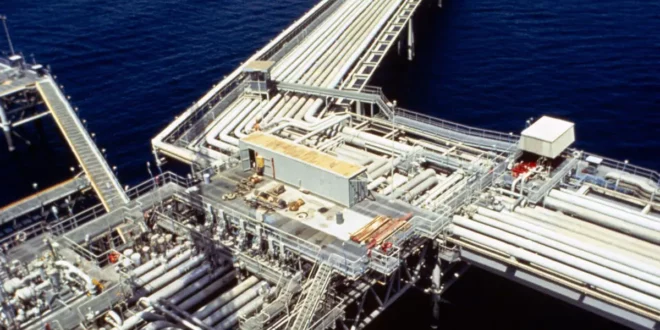
Iranian-backed Houthi strikes over the weekend on Saudi Arabia‘s Yanbu Red Sea terminal and the Jazan refinery matter less for the damage inflicted than for what they reveal: the vulnerability of the kingdom’s oil export safety valve, analysts told AGBI.
While there is no evidence of shipment disruption, experts say the attacks have left exposed what has become Saudi Arabia’s most strategically important oil export corridor.
The Yemeni militant group’s actions are the first reported attacks on Saudi oil infrastructure since a UN-brokered truce in 2022.
“Both operations successfully achieved their objectives,” Houthi military spokesperson Yahya Saree said in a video statement on Saturday, adding that the attacks were in response to Saudi strikes on Houthi sites in Hodeidah and Kamaran Island on Yemen’s western coast.
State oil giant Saudi Aramco has yet to confirm any impact on refinery throughput or crude loadings.
“It is safer to view this as a serious escalation in risk rather than a confirmed large-scale supply outage,” said Salih Yilmaz, senior energy analyst at Bloomberg Intelligence.
Yanbu is the more strategically important of the two locations.
Since the outbreak of the US-Iran war, Yanbu has evolved from an important Red Sea terminal into Saudi Arabia’s principal crude export outlet bypassing the Strait of Hormuz, which remains effectively closed by Iran.
As shipping through the Gulf became increasingly constrained, exports were redirected via the kingdom’s East-West pipeline, transforming Yanbu into a cornerstone of global energy security.
The pipeline can transport 7 million barrels per day from Saudi Arabia’s Eastern Province to the Red Sea. After supplying roughly 2 million bpd to domestic west coast refineries, about 5 million bpd of export capacity remains available through Yanbu.
Between March and June, Saudi exports of crude and refined products from Red Sea ports averaged 4.7 million bpd, almost three times the 1.6 million bpd sent abroad during the same period last year, according to shipping association Bimco.
Jazan is strategically important for different reasons. Its refinery processes around 400,000 bpd, supplying diesel, petrol and petrochemical feedstocks to domestic and regional markets.
“Damage there could affect refined-product availability and regional supply even without materially reducing Saudi crude production,” said Neil Quilliam, AGBI columnist and policy research specialist at Chatham House.
Shipping impact
The attacks have already disturbed shipping markets. Commodity vessel traffic through Bab al-Mandab, the southern gateway to the Red Sea, fell sharply on Sunday, according to shipping data company Kpler, with only 11 commodity vessels transiting the waterway – the lowest daily level in months.
According to Bimco, about 92 percent of Saudi exports from Red Sea ports – roughly 4.3 million bpd – transit Bab al-Mandab before reaching global markets.
“The ships will have to sail via the Suez Canal into the Mediterranean before proceeding to their final destination” if the southern Red Sea route becomes too risky, said Niels Rasmussen, Bimco’s chief shipping analyst.
This weekend’s attacks, therefore, are significant because of where they occurred and what the facilities now represent, rather than the scale of physical damage incurred.
The Houthis said they also attacked Saudi oil infrastructure on Monday in response to incursions by Saudi drones. The kingdom said it shot down drones aimed at petroleum targets, some in Eastern Province and others in the capital Riyadh, during the day.
In a statement posted on social media, the Saudi defence ministry said “terrorist attempts were launched from Iraqi territory and carried out by Iranian-backed terrorist militias”.
“It seems the Houthis are now targeting infrastructure specifically being used to circumvent the Hormuz disruption,” said Cyril Widdershoven at advisory firm Blue Water Strategy.
“At the same time, they are attacking Saudi-linked tankers and have threatened Saudi maritime activity more broadly.”
The last big Houthi-linked strikes on Saudi oil infrastructure were the 2019 attacks on Abqaiq and Khurais. These temporarily knocked out 5.7 million bpd of Saudi production – roughly 5 percent of global oil supply – triggering the biggest single-day jump in oil prices on record.
“In 2019 Saudi Arabia could compensate through inventories, spare capacity and alternative infrastructure. Today, Yanbu is itself the alternative infrastructure because Hormuz is severely constrained,” Quilliam said.
This raises the prospect that even unsuccessful or limited strikes could have an outsized economic impact by increasing war-risk insurance premiums, deterring tanker operators and making Red Sea export routes more expensive and unpredictable.
“The Houthis are therefore targeting the safety valve rather than the heart of the production system,” he said.
Markets largely shrugged off the Houthi-Saudi attacks, with oil prices hovering near a one-week low on Monday as the US and Iran paused strikes over the weekend.