 Eurasia Press & News
The Iran war reflects how drones are no longer supporting weapons but central instruments of modern conflict, redefining how battles are fought and defended
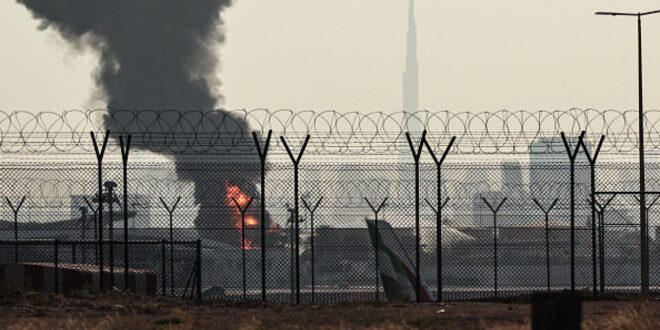
In over two weeks of war, unmanned weapons systems have become the backbone of Iran’s strategy, targeting military bases, energy facilities, ports, and shipping lanes – and, crucially, the sense of security on which the Gulf states’ economic models depend.
This is more than a matter of weapon counts; it points to a broader shift in the character of modern conflict where drones no longer play just a supporting role alongside missiles, but are emerging as key instruments in their own right.
Unmanned Aerial Vehicles (UAVs) are the principal tool through which Iran can sustain pressure over time, impose costs on its adversaries, and stretch regional air defences without exhausting its higher-end arsenal too quickly.
In that sense, the war is increasingly resembling the logic already seen in Ukraine: attritional, layered, and shaped by the economics of unmanned warfare.
Iran’s drone-led pressure campaign
The numbers help explain why. According to Ibrahim Jalal, an independent policy adviser based in Yemen who has been tracking the strikes, drones have accounted for the vast majority of projectiles launched against Gulf states since the beginning of the war. “Of the 3,885 projectiles recorded as of 18 March, roughly three-quarters have been drones,” he told The New Arab.
The distribution of attacks has also been uneven across the region. Jalal’s data show that the UAE alone absorbed 51% of all recorded incidents, making it the most exposed country in the conflict so far. Emirati territory has reportedly faced around 1,670 drones compared to just over 330 missiles, making it the most drone-saturated theatre of the campaign.
Saudi Arabia has also been targeted overwhelmingly by drones, while Bahrain has experienced a mixed but still drone-heavy threat. Qatar remains the main exception. There, ballistic missiles have played a comparatively larger role, likely reflecting the strategic importance of targets such as Al Udeid Air Base and other high-value military facilities where speed and penetration matter more than sustained harassment.
“The data suggests a deliberate operational pattern rather than random employment of available weapons,” Jalal told TNA. In other words, Tehran is not simply launching whatever systems are available. It appears to be calibrating its strike packages according to target type, geography, and intended effect.
Drones are being used where sustained harassment, economic disruption, and air-defence exhaustion can generate strategic pressure even without catastrophic destruction. Missiles, by contrast, are being reserved more selectively for harder or symbolically more significant strikes.
This division helps explain the trajectory of the conflict. Iran is not replacing missiles with drones altogether. It is using drones to make the campaign sustainable.
For the first time in this conflict, pro-Iranian militias from Iraq’s Islamic Resistance have also reportedly deployed fibre-optic FPV drones over the US embassy in Baghdad – a tactic closely associated with the war in Ukraine and a sign that battlefield innovations are now rapidly spreading across regions.
That makes strategic sense. One-way attack drones such as the Shahed family are relatively cheap, scalable and suited for repeated use across multiple theatres. They can be launched in large numbers, force defenders to react repeatedly, and impose a severe cost-exchange dilemma on countries relying on Patriot, THAAD and other expensive interceptors.
“Drones offer a way to maintain pressure over time while conserving more limited missile inventories,” Jalal says. Even where interception rates remain high, defenders may still burn through costly interceptors to stop systems that are far cheaper to produce and replenish.
This is why the Iranian campaign increasingly looks less like a conventional missile offensive and more like a campaign of managed attrition. Drones offer Tehran a way to generate persistent military and psychological pressure while conserving some of its most valuable missile assets.
They also create uncertainty for Gulf governments forced to defend not only military installations but also airports, desalination plants, refineries, ports, data centres, and commercial hubs.
In a region where infrastructure concentration is a strategic vulnerability, repeated drone attacks can have consequences far beyond the direct physical damage they inflict.
Russia’s hidden hand in Iran’s drone war
One of the most striking features of this evolving drone war is how deeply it overlaps with the dynamics of the conflict in Ukraine. The Iran war is not just making greater use of unmanned systems already familiar from the Russian-Ukrainian battlefield. It is also importing the tactics and operational logic developed there.
On one side stands Russia. Reports by Western intelligence cited by CNN suggest Moscow has been providing Tehran with specific advice on how to employ drones more effectively, drawing on lessons from its own large-scale Shahed attacks against Ukrainian targets.
Russia has spent years refining tactics for launching loitering munitions in waves, adjusting routes and timing to complicate interception. If those lessons are now being transferred to Iran, the partnership between the two countries is becoming increasingly reciprocal.
This would mark an important evolution. Since 2022, attention has focused primarily on Iran as a supplier of drones and drone know-how to Russia. But recent reports suggest the relationship may now be feeding capabilities in both directions.
Open-source analysis cited by Kateryna Bondar at CSIS has pointed to the possible use of Russian-produced Geran-2 drones in the Gulf, a domestically built version of the Iranian Shahed-136 that may incorporate modifications designed to improve resilience against electronic warfare. Ukrainian officials have also claimed Iran has used Russian-produced Shaheds “with Russian details” against US and Gulf targets.
Whether every such claim is fully confirmed or not, the broader point stands: Russia is no longer merely a beneficiary of Iranian drone warfare. It may now be helping to shape how Iran wages it, including through tactical advice and intelligence sharing.
The Gulf looks to Kyiv for answers
But the overlap runs in the opposite direction, too. If Russia is helping Iran attack more effectively, Ukraine is increasingly seen by Gulf states as a valuable source of expertise in defending against exactly this kind of threat.
Few countries have accumulated more experience than Ukraine in defending against massed Shahed attacks. Kyiv and its partners have learned that traditional air defence systems alone are poorly suited to sustained drone attrition. Million-dollar interceptors cannot remain the first line of defence against targets that may cost tens of thousands of dollars each, especially when they arrive in large numbers.
The problem is not only economic but also logistical. Since the outbreak of the war, Patriot and THAAD interceptors have been used extensively across the region by Gulf states, the United States and Israel to counter Iranian missiles and drones.
Sustained interception campaigns in recent weeks have reportedly placed growing pressure on strategic interceptor stockpiles, highlighting the limits of relying exclusively on high-end missile defence in prolonged conflicts.
“The use of interceptor drones against Shaheds follows the economics of war,” Olena Kryzhanivska, a postdoctoral fellow at the Canadian Global Affairs Institute, told TNA.
“A country needs cheaper and more scalable solutions to incoming threats rather than relying exclusively on technologically sophisticated systems that are expensive and burdensome to produce.”
Ukraine has increasingly relied on specialised interceptor drones developed by domestic manufacturers to counter Russian loitering munitions. Systems such as the Sting and Hunter interceptor drones produced by Ukraine’s TAF Industries are specifically designed to hunt and destroy incoming UAVs such as the Shahed family.
Ukraine’s battlefield experience has effectively turned the country into one of the world’s leading laboratories for counter-drone warfare. As Federico Borsari, non-resident fellow at the Center for European Policy Analysis, notes, the most important lesson from the conflict is that defending against large-scale drone attacks requires a layered approach.
“There is no silver bullet in counter-UAS,” Borsari told TNA. “You need multiple layers of sensors and effectors designed to tackle different types of threats at different ranges.” These layers can include electronic warfare, jamming and spoofing, but also hard-kill solutions such as machine guns, guided rockets, directed-energy systems, and interceptor drones.
These systems form part of a broader layered architecture combining electronic warfare, mobile fire teams, and sensor networks. Interceptor drones themselves are comparatively inexpensive. “Interceptors can cost around $1,000 and provide an effective way to down Shaheds that cost roughly $20,000–30,000,” Kryzhanivska noted.
Yet technology alone is also not enough. “Simply owning these systems is not a solution,” she added. “They require trained operators and an entire ecosystem of detection, command and control, and coordination among different units.”
According to Borsari, Ukraine’s battlefield experience is precisely what makes it such an attractive partner for countries now facing similar threats. “Ukraine has the best operational experience in the world when it comes to countering large numbers of drones,” he said.
But Borsari also cautions against comparing interceptor drones directly with traditional air-defence systems. “They are designed for different missions,” Borsari explained. “High-end air defence systems focus primarily on missile threats, while low-cost drones often fly low and slow, making them harder for traditional radars to detect and engage.”
That ecosystem – built under the pressure of constant drone attacks – is precisely what many countries are now seeking to understand.
Recent reporting suggests that this cooperation is already moving from exploration to implementation. Saudi Arabia, the UAE, Qatar, and Kuwait have all shown interest in Ukrainian interceptor drone technologies, with Abu Dhabi and Doha reportedly requesting 5,000 and 2,000 Octopus-100 systems, respectively, from the Ukrainian company TAF Industries.
According to The Kyiv Independent, Riyadh is also preparing what industry sources describe as a “huge deal” for Ukrainian-made air-defence equipment and interceptor technologies.
At the operational level, Ukrainian advisers and military specialists have been deployed across the region to share expertise developed during the defence against Russian drone attacks. Ukrainian President Volodymyr Zelenskyy stated on 17 March that more than 200 Ukrainian personnel are already operating across the UAE, Saudi Arabia and Qatar, with additional teams expected in Kuwait.
Kyiv has also signalled its capacity to supply large volumes of interceptor drones – potentially up to 1,000 units per day – including platforms such as the Wild Hornets STING, designed to counter mass drone attacks without exhausting expensive missile stockpiles.
Taken together, these developments suggest that Gulf states are not only seeking Ukrainian know-how but are beginning to integrate elements of Ukraine’s counter-drone model – combining operational expertise, training and scalable low-cost systems – into their own defence architectures.
The maritime drone front
This convergence between the Ukrainian and Gulf theatres is also becoming visible at sea. Iran’s reported use of explosive unmanned surface vessels (USVs) and drone boats against tankers and commercial shipping in and around the Strait of Hormuz adds another layer to the conflict’s drone-centred evolution.
According to Dr Sidharth Kaushal, a senior research fellow at RUSI, these systems represent an important tactical development even if they are not entirely unprecedented.
“Uncrewed surface vessels used as one-way attack munitions are tactically significant but less strategically revolutionary,” he told TNA.
Their effectiveness has already been demonstrated elsewhere. “Their ability to strike less well-defended ships has been demonstrated in both the Black Sea and the Red Sea,” Kaushal explained, noting that the concept is in many ways an evolution of earlier asymmetric maritime threats such as naval mines.
In the confined geography of the Strait of Hormuz, their impact could be considerable. “Hormuz, with its narrow sea lanes and target-rich environment, is an ideal area to use these capabilities,” he said.
The systems also fit naturally within Iran’s broader maritime doctrine. “Since Iran’s naval warfare in the Gulf has long relied on asymmetric methods to target civilian shipping rather than confronting the US Navy directly, maritime drones are a natural extension of that approach,” Kaushal added.
Their growing use may also force naval powers to adapt their surveillance and interception tactics. Detecting small surface drones in crowded coastal waters is difficult with traditional radar systems, prompting navies to increasingly rely on airborne surveillance platforms, such as helicopters and unmanned aerial vehicles, to identify and intercept them before they reach their targets.