 Eurasia Press & News
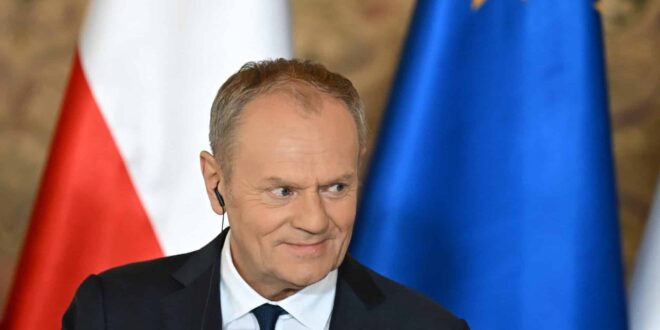
Since Peter Magyar’s stunning victory on April 12, the tone between Budapest and Warsaw has shifted quickly. The two centre-right leaders exchanged warm words and made ambitious declarations, heralding what some hope could become a new axis in Central Europe.
On election night, Tusk called Magyar from South Korea, barely containing his glee at the result: “I’m so happy. I think I am even happier than you, you know?” The following day, he framed the result in broader regional terms: “First Warsaw, then Bucharest, Chisinau, and now Budapest. This part of Europe is showing that we are not condemned to corrupt and authoritarian rule.”
Magyar responded in kind, announcing that his first foreign visit, on May 20, would be to Warsaw. He also moved quickly on a particularly sensitive issue between the two countries, declaring that Polish politicians Zbigniew Ziobro and Marcin Romanowski, both of whom had been granted political asylum by Viktor Orban, “will not stay here long”, signalling a willingness to align with Tusk’s priorities.
While the cordial relations between the two nations is often framed through a centuries-old affinity – captured in the Polish saying “Pole and Hungarian, two brothers alike” – this emerging alliance appears predominantly tactical.
“For years, Hungary and Poland were seen as twin pillars of an illiberal bloc within the EU – what we are now witnessing is a possible reversal of that axis,” Veronika Munk, a Hungarian journalist with Dennik N, tells BIRN.
Magyar’s willingness to draw on Poland’s recent experience – particularly in restoring institutional checks and balances, re-engaging with Brussels, and unlocking frozen EU funds – points, in Munk’s view, to a pragmatic rather than an ideological reset.
For Daniel Hegedus of the Institut fur Europaische Politik in Berlin, “the rapprochement with Poland helps the new Hungarian government to project normalisation at the level of European politics and to move beyond the legacy of Hungary being perceived as a Trojan horse of the Kremlin within the EU.”
Lessons – and warnings – from Warsaw
One takeaway from Poland’s recent experience is hard to dispute. “Tusk can certainly show Magyar how to unlock EU funds – there’s no doubt about that,” says Dominika Sitnicka, a political journalist with OKO.press.
The stakes are clear: regaining access to EU money sits at the top of Magyar’s agenda, from freeing up around 18 billion euros in frozen funds to securing a further 16 billion in European defence financing – and ending the 1-million-euro-per-day penalty imposed on Hungary for breaching EU immigration rules.
But beyond this relatively technical, if politically sensitive task, the parallels begin to fray. Early gestures can only go so far. Steps such as reassessing asylum decisions, joining the European Public Prosecutor’s Office (EPPO) and pursuing corruption cases may underline Magyar’s ambitions, but each is fraught with legal hurdles and carries a tangible political price at home.
“Poland’s own reform path has shown that dismantling entrenched systems is slower and more contested than campaign rhetoric suggests,” says Munk.
Sitnicka points out that if there’s a lesson to be learned here, it’s less about copying Poland and more about what to avoid. “Tusk took power with very high expectations, and people became disappointed quite quickly,” she notes.
Much of that frustration, she believes, stems from unmet flagship promises, internal coalition tensions, and the absence of a clear governing vision beyond removing the previous nationalist-populist administration led by Law and Justice (PiS).
Sitnicka points in particular to Polska 2050, a junior partner in Tusk’s coalition, as a cautionary tale, alluding to the party’s recent fragmentation and slump in the polls. “It shows just how hard governing can be for political newcomers. That’s a real risk for Tisza – many of their people are new to politics, and without that experience, it’s easy to be outmanoeuvred or simply overwhelmed,” she tells BIRN.
Different systems, different constraints
For all the surface parallels, the structural differences between the two countries are profound. “When people say Polish liberals should ‘be like Magyar’, it strikes me as almost absurd,” Sitnicka says.
If anything, she believes the closer parallel would be within the PiS camp. “It would mean a relatively untainted PiS politician breaking away and suddenly building a new centre-right force from scratch ahead of the 2027 election,” she says, adding that even that comparison falls short, given Poland’s populist right is currently in opposition.
More importantly, the balance of power is entirely different. “Magyar won a two-thirds majority in what was effectively a binary election,” Mateusz Mazzini, editor-at-large with the Gazeta Wyborcza daily, tells BIRN. “You can debate whether it was Fidesz versus anti-Fidesz or Fidesz versus Tisza, but the reality is that other parties stepped aside.”
Tusk, by contrast, took power at the head of a much broader coalition – seven parties, three separate electoral lists – in an ideological alliance spanning centre-right to left wing, making often painful compromises a pre-requisite for the government.
“Magyar is in a far more comfortable position than Tusk ever was: he has a constitutional majority, will effectively have his own president, and controls all the key levers,” Sitnicka comments. “Tisza is walking into power with a kind of highway for reforms – something Tusk’s administration simply didn’t have.”
Since taking office in 2023, Tusk has governed under cohabitation with a hostile presidency – first Andrzej Duda, now Karol Nawrocki – with vetoes repeatedly blocking key reforms. “Those are real, structural obstacles,” Sitnicka comments, including measures tied to unlocking EU funds.
The legal context differs just as sharply. While Poland’s rule-of-law crisis was marked by open constitutional breaches and prolonged institutional conflict, which effectively created two parallel legal realities, Hungary’s system, however illiberal, was largely constructed within a single legal framework. That distinction, Mazzini reckons, may make it easier to dismantle.
Alignment – with limits
If the bilateral reset with Warsaw offers Magyar a pragmatic entry point, his ambitions appear to stretch further to the regional stage, where he is already signalling an effort to breathe new life into Central European cooperation. In that vision, the Visegrad Group – long paralysed by internal rifts – could be revived and even expanded into a looser V4+ constellation, extending beyond its traditional members to include countries such as Austria, Croatia or Slovenia.
“Strengthening Central European regional cooperation plays a key role in the strategic thinking of the incoming administration,” Hegedus comments.
Yet even if the political will exists, alignment between Magyar and Tusk is still far from assured, with Ukraine likely to be the first real point of friction. The EU’s 90-billion-euro loan to Ukraine was finally approved on Wednesday after Orban – in one of his last acts as PM – lifted his veto, though Magyar is likely to side with his Czech and Slovak counterparts in declining to support Kyiv’s quick path towards EU membership.
“Ukraine is clearly benefiting from Orban no longer being in power – but that doesn’t mean it has gained a real ally,” Mazzini says. “What it has lost is a major antagonist.”
The same ambiguity applies to the broader relationship with the EU. Magyar has signalled a willingness to re-engage, but how far that shift will go remains unclear – and may depend to a large part as much on domestic constraints as on external expectations.
“Magyar’s politics – especially on foreign policy – are far from liberal,” Mazzini notes. “Nor is he clearly pro-EU, at least in any straightforward sense.”
In some respects, he adds, Magyar may have more in common with Italy’s Giorgia Meloni than with Tusk.
Since 2022 and Russia’s full-scale invasion of Ukraine, Poland’s regional focus has shifted decisively northward – toward the Baltic states, especially in the realm of security cooperation – at the expense of Central Europe, Hegedus argues. While Budapest’s overtures might “contribute to a more nuanced and balanced geopolitical approach in Warsaw,” he suggests they are unlikely to alter that trajectory in any meaningful way.
In his view, Hungary “simply lacks sufficient strategic weight”, particularly in the areas that matter most to Polish strategic and security thinking.
For now, the emerging Magyar-Tusk alignment remains more promise than policy. “The real test,” Munk believes, “will be whether this partnership can sustain momentum beyond the initial transition period and deliver tangible institutional and diplomatic results.”
Here, she points out, coordination on the rule of law, EU cooperation and security, particularly in relation to Russia and Ukraine, will be key.
Mazzini, too, remains cautious. “What Magyar ultimately does with his views remains an open question,” he says. “One can just as easily imagine a scenario in which the Polish and Hungarian prime ministers don’t fully align, and Magyar positions himself as a more pragmatic actor.”
In practice, that would mean still being critical of some EU policies, but less openly confrontational than his predecessor and more compromise-seeking in serving Hungary’s interests.
The Budapest–Warsaw rapprochement may be gathering pace. But it is only when interests begin to pull in different directions that its durability will be tested.