 Eurasia Press & News
Iran acquired significant leverage against the U.S. by expanding the war throughout the region, positioning it to achieve a ceasefire deal on favorable terms.
At the same time, Tehran’s failure to deter repeated U.S. military action might account for the regime’s willingness to consider a resolution to the battle for control of the Strait of Hormuz.
Tehran and its allies have attacked Arab Gulf countries intensively as a “weak link” in the U.S. coalition, but several Gulf states, particularly Saudi Arabia, have broken their previous taboos against direct military retaliation.
Iranian leaders have proven their ability to sow chaos in the region and the global economy, but some of Tehran’s allies are no longer reliable shields that can deter U.S. or Israeli military action against Iran.
Iran’s strategy to counter the war U.S. President Donald Trump and Israeli Prime Minister Benjamin Netanyahu initiated on February 28 has rested on one fundamental pillar: to cause enough damage to the global economy and regional infrastructure that Trump, or any future U.S. president, will avoid conflict with the Islamic Republic. Although its strategy has helped the regime resist U.S. coercion and built significant leverage against Washington, Iranian leaders have not been able to deter Trump from renewing strikes against Iran or threatening a major escalation of combat. Additionally, Iran’s strategy has expanded the number of regional stakeholders arrayed against Iran, even as key U.S.-aligned regional leaders welcome de-escalation and consider accommodation with Iran.
As of the beginning of August, Iranian leaders judged that they had achieved significant leverage to negotiate a deal with Washington on favorable terms. Hardliners rejected earlier compromises proposed by the Sultanate of Oman — which sits across the Strait of Hormuz from Iran — to open the waterway on terms the Trump team can accept. Iran’s Islamic Revolutionary Guard Corps (IRGC), a bastion of Iranian hardline ideology, initiated attacks on shipping in the Strait, and on U.S. forces in Jordan, derailing talks with Oman. After a renewed effort in late July by Muscat to de-escalate, Iranian negotiators, led by Foreign Minister Abbas Araghchi, appear to have accepted a formula for joint Iran-Oman management of the Strait. Under the purported interim deal — with President Trump saying it might be announced this week — for the next 60 days, Iran would manage inbound shipping near its coast, and Oman would manage outbound traffic along its coast, although in “coordination” with Iran. Iran and Oman would subsequently negotiate an agreement on joint management of Strait traffic. According to U.S. officials, no fees or tolls would be collected by any state during the interim period, but Iran and Oman might divide voluntary “service fees” paid by shipping firms. The deal apparently includes an agreed return to a state of ceasefire and a lifting of the U.S. naval blockade of Iranian ports.
As of Wednesday, Iranian leaders have confirmed that talks with Oman are ongoing but have not confirmed Trump’s assertion that a deal is imminent. Experts assess that the emerging accord, if finalized, would ratify Iran’s capacity to control the Strait and therefore preserve the strategic leverage Iran did not enjoy before the war. However, many remain uncertain whether Iranian hardliners will accept the emerging deal, even if it satisfies the civilian leaders who seek to avoid further U.S.-inflicted damage to Iran’s infrastructure.
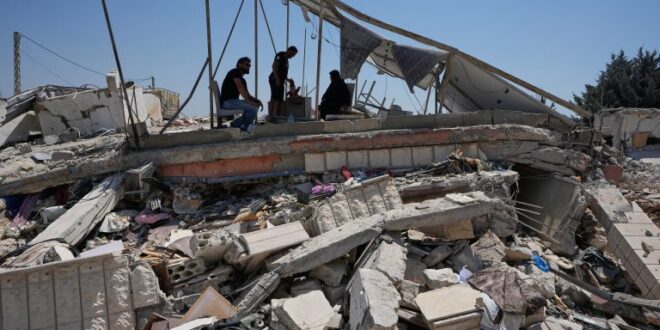
The Iranian strategy that has led to a possible agreement surrounding the Strait was predicated on an assumption that the Arab Gulf states constitute a “weak link” in the U.S. effort to coerce concessions from Tehran. Iranian leaders assessed, accurately, that attacking Gulf and other regional targets would generate pressure on Trump to avoid escalation and ultimately wind down the conflict on terms acceptable to Tehran. Gulf state energy infrastructure and military bases, which host U.S. forces, have been significantly damaged by Iranian short-range ballistic missile and drone strikes. The Gulf states have not only suffered major revenue shortfalls from Iran’s closure of the Strait, but they have been dealt a potentially fatal blow to their economic diversification programs that depend on a steady flow of global capital investment and high technology imports. Last week, Iran threatened extensive retaliation, including on vital desalination plants, if Trump implemented his threat to proceed with a planned major strike package. Gulf leaders succeeded in persuading Trump to forego the planned escalation and allow more time for the Oman-Iran discussions to bear fruit.
However, Tehran might have miscalculated that its strikes on the Gulf states entailed little risk. The regime assumed that Gulf and other Arab states would not seek to antagonize Iran by retaliating for its attacks but rather accede to Iranian demands to sever their longstanding and close defense relationships with Washington. Even as the Iran-Oman talks progressed over the past week, Iran’s non-state militia allies in Iraq, along with Iran, attacked Kuwait continuously. Iran seeks to force Kuwait’s leaders to expel the U.S. Army troops that have used advanced missile artillery systems — particularly the Precision Strike Missile (PrSM) — to strike targets in southern Iran. On Tuesday, the IRGC attacked a U.S. military base in Kuwait with three drones. Last week, an apparent drone strike targeting Damietta, a Mediterranean port in Egypt, signaled that even the Suez Canal might not remain a safe alternative route for energy exports. Two ships, including a U.S. gas tanker, caught fire after the blast, which marked the first attack on Egyptian soil since the war began, and again took the war close to European territory. Earlier in the war, Iran launched several missiles that reached Turkish territory.
Tehran also perceived that its allies could put pressure on Saudi Arabia from multiple axes, causing de-facto leader Crown Prince Mohammed bin Salman (MbS) to insist Trump end the war short of achieving any core U.S. goals. To the Kingdom’s south, Iran encouraged its ally in Yemen, the Houthi movement — which was already frustrated by a Saudi blockade of its airports — to impose a blockade on Saudi shipping through the Bab el-Mandeb Strait. On Wednesday, according to Houthi military spokesman Yahya Saree, the group “successfully targeted the Saudi oil tanker ‘Wafa’ in the northern Red Sea, off the coast of the [major Saudi Red Sea oil loading port of] Yanbu, with a number of ballistic missiles.” This is the eighth ship the Houthis have targeted since the start of their blockade on July 22. Meanwhile, Iran’s militia allies in Iraq have been firing drones at oil facilities in Saudi Arabia’s Eastern Province.
Yet Tehran’s strategy has produced more significant costs and risks than regime leaders anticipated, multiplying the number of adversaries arrayed against Iran and driving neutral states into closer alignment with the U.S. Some of the Gulf states have decided to abandon their prior self-imposed red lines by striking Tehran alongside each other or the U.S. with their own forces. Last month, Bahrain and Kuwait joined the more hardline United Arab Emirates (UAE) in a quiet bombing raid against military targets inside Iran — the first known direct attacks by the two Gulf nations against Tehran. The UAE has reportedly been striking Iranian targets for several months, despite Iranian threats to escalate its attacks on UAE infrastructure.
Last Wednesday, Saudi Arabia proved there are limits beyond which it would not be pushed before it moved to reestablish deterrence. The Kingdom entered the warfare directly by joining the U.S. in a large strike on the bases of pro-Iranian Iraqi militias near Basra. The militias have been responsible for several of the attacks on Saudi infrastructure in recent weeks. Several IRGC advisors to the Iran-backed militias were killed in the strike, as were more than 25 Iraqi militia members. The Saudi strike represented an attempt to deter Iraqi militia attacks on its facilities but avoided an attack on Iranian territory that might have drawn the Kingdom into a sustained conflict with Iranian forces. Saudi defense ministry spokesman Major General Turki al-Malki portrayed the strike in Iraq as a limited reaction to specific attacks, rather than an entry into the wider war, saying: “The Kingdom confirms that it is not seeking escalation but that it will respond to any aggression.” Still, the attack on the Iraqi militias will likely prompt the Baghdad government to redouble its efforts to disarm the Iran-aligned militias, representing a setback for another one of Iran’s non-state allies. Last week, Hamas agreed to disarm, and Hezbollah remains under significant pressure from Israeli forces in Lebanon.
Potentially more problematic for Tehran’s deterrence effort, there are reports that Saudi Arabia might be willing to escalate against the Houthis — the Iran ally least affected, to date, by U.S., Israeli, or allied military action. A Saudi-backed ground offensive against the Houthis would shatter what remains of the 2022 Yemen ceasefire, but reports indicate Kingdom forces might be preparing for battle, in concert with their ally, the Aden-based Presidential Leadership Council. However, close observers say the Kingdom is undertaking contingency planning and force repositioning, without moving decisively to push Houthi forces back from their positions. Signaling its willingness to counter the Houthi threat to its shipping on the Red Sea, Saudi officials announced the formation of a 14-nation defense coalition aimed at protecting international shipping and energy routes in the Red Sea. A concerted Saudi offensive against the Houthis would, if successful, further set back Iran’s pre-war strategy to use its network of armed non-state allies to shield itself from U.S. and Israeli attacks.